
What Is the Window of Tolerance in Trauma and Addiction?

November 1, 2026
The window of tolerance is the range of emotional arousal in which a person can think clearly, feel their emotions, and respond without becoming overwhelmed or shut down. The term was introduced by psychiatrist Dan Siegel in 1999. In addiction treatment, it explains why many people use substances to escape states that fall outside that range.
A man walking along a garden trail.

The window of tolerance is the range of emotional arousal in which a person can think clearly, feel their emotions, and respond without becoming overwhelmed or shut down. The term was introduced by psychiatrist Dan Siegel in 1999. In addiction treatment, it explains why many people use substances to escape states that fall outside that range.

What Happens Inside and Outside the Window?

The window of tolerance has 3 zones, and each one feels different:

  • Inside the window, a person feels stressed at times but can still reason, connect, and make choices.
  • Above the window, hyperarousal causes anxiety, panic, anger, racing thoughts, and restlessness.
  • Below the window, hypoarousal causes numbness, exhaustion, disconnection, and shutdown.
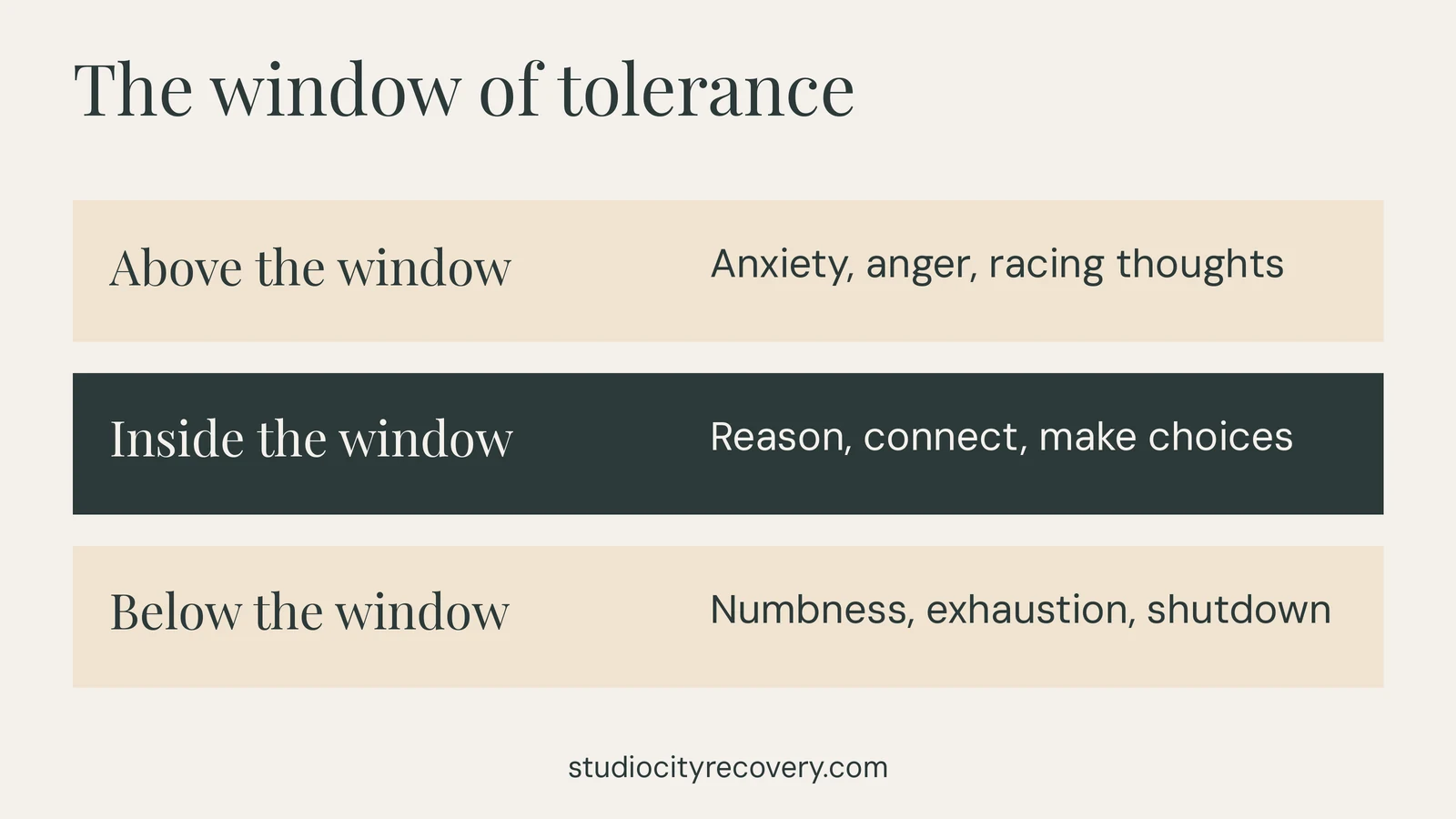
Three arousal zones: hyperarousal above, clear thinking and connection inside, and hypoarousal below the window.
The window of tolerance includes a workable middle range between hyperarousal and hypoarousal.

What Does Hyperarousal Look Like?

Hyperarousal looks like a body stuck in fight-or-flight. Common signs include a pounding heart, rapid breathing, irritability, trouble sleeping, and feeling unable to sit still.

What Does Hypoarousal Look Like?

Hypoarousal looks like a body that has shut down to protect itself. Common signs include flat emotions, low energy, feeling detached from yourself, and difficulty speaking or moving.
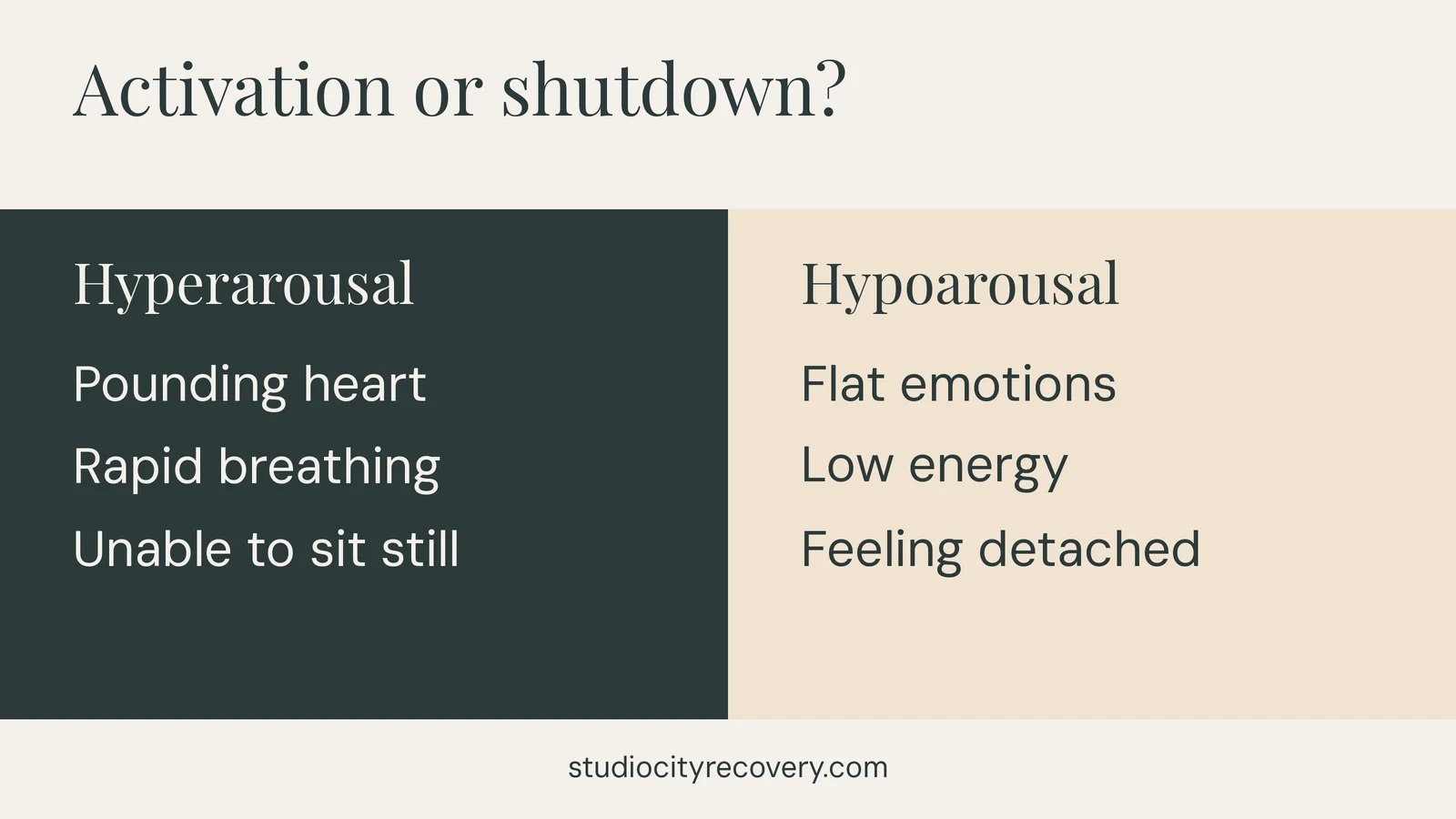
Hyperarousal signs include rapid breathing and restlessness; hypoarousal signs include low energy and detachment.
Activation and shutdown can show up through different physical and emotional signals.

How Does Trauma Affect the Window of Tolerance?

Trauma narrows the window of tolerance. After repeated threat, the nervous system learns to react faster and harder. Ordinary stress, like a tense conversation or an unexpected noise, can push a trauma survivor outside the window in seconds.

Can the Window Change Over Time?

The window of tolerance can change over time in both directions. It narrows under chronic stress, poor sleep, illness, and substance use. It widens with safety, consistent routines, supportive relationships, and practiced regulation skills.

How Can You Tell Which Zone You Are In?

You can tell which zone you are in by checking 3 signals: your breathing, your muscle tension, and your ability to think through a decision. Fast breathing and tight muscles point above the window. Heaviness and blankness point below it.

How Does the Window of Tolerance Relate to Addiction?

Substances often become a tool for managing states outside the window. 4 common patterns:

  • Alcohol or benzodiazepines used to calm hyperarousal.
  • Opioids used to numb emotional pain.
  • Stimulants used to escape the flatness of hypoarousal.
  • Cannabis used to quiet racing thoughts at night.

Why Does Substance Use Make the Window Smaller?

Substance use makes the window smaller over time. Withdrawal, crashes, and disrupted sleep push the nervous system outside the window more often. The person then needs the substance just to feel normal, which is part of how dependence develops.

How Do You Widen Your Window of Tolerance?

You widen your window of tolerance with skills that calm or activate the nervous system on purpose. 5 commonly taught approaches:

  1. Grounding, such as naming 5 things you can see and 4 things you can hear.
  2. Slow breathing with longer exhales than inhales.
  3. Gentle movement or yoga to reconnect with the body.
  4. Temperature changes, like cold water on the face, for intense hyperarousal.
  5. Routine sleep, meals, and exercise to stabilize baseline arousal.
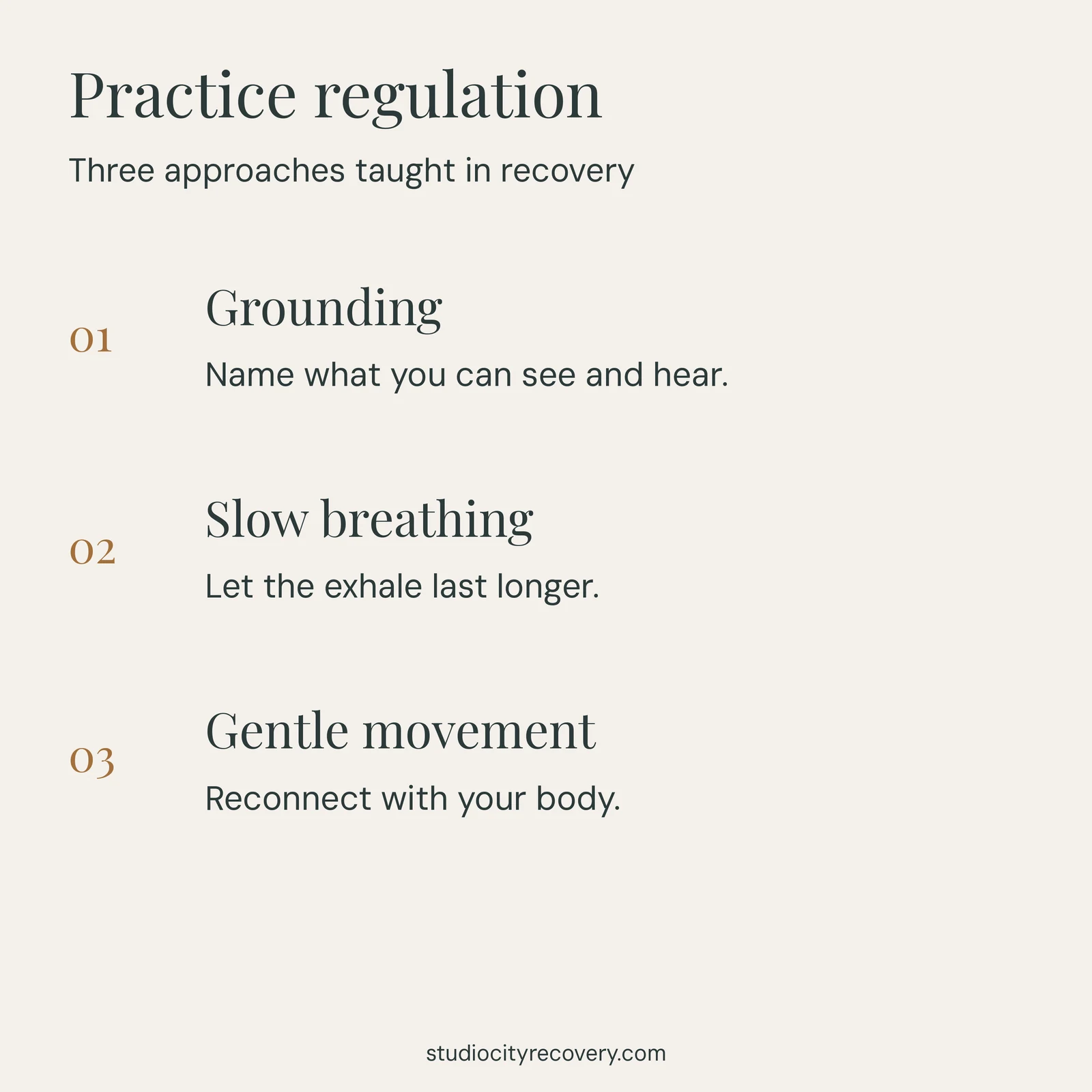
Three regulation practices: grounding in your senses, slower breathing with longer exhales, and gentle movement.
Grounding, slow breathing and gentle movement are three approaches taught in recovery.

Which Therapies Use the Window of Tolerance?

Several therapies use the window as a guide for pacing treatment. Dialectical Behavioral Therapy (DBT) teaches distress tolerance and emotion regulation, and EMDR therapy for addiction processes trauma only when a client can stay inside the window. Somatic experiencing therapy works directly with body sensations to expand it.

Why Does Pacing Matter in Trauma Treatment?

Pacing matters because processing trauma outside the window is not therapeutic. If a client becomes flooded or shuts down, the brain cannot integrate the experience. Good trauma treatment builds stabilization skills first and moves into trauma processing only when the window is wide enough.

How Does This Connect to Relapse?

Leaving the window of tolerance is a common precursor to relapse. DBT distress tolerance for getting through cravings safely teaches skills for those moments, and the connection between trauma and addiction explains the broader picture.

How Does Studio City Recovery Help Clients Widen Their Window?

Studio City Recovery helps clients build regulation skills before and during trauma work. Co-occurring disorder treatment addresses PTSD and anxiety alongside addiction, and meditation and individual therapy are built into our 28 and 30 day drug and alcohol rehab. Call (866) 995-8755.
Recovery Starts Here

Our team of experienced professionals are here to help you shape your future.

book your stay

Testimonials

Our patients have lived the best of their lives here. Here’s what they had to say.

Image of brown curly brace brackets resembling a shape on white background.

"The owners don’t care about money. They care about recovery. They’re loving people that will accept you as their own child. They’ve saved my life."

Jonathan
|
1 month ago
Image of brown curly brace brackets resembling a shape on white background.

"This treatment center truly changed my life. From the moment I arrived, the staff and owners made me feel loved and cared for like family. They genuinely put their hearts into helping every single person who walks through the door. One thing I really appreciated was that they allowed me to have my phone, which helped me stay connected while still focusing on my recovery. The therapy sessions and case management were absolutely life-changing — they gave me the tools, guidance, and support I needed to not just get sober, but to stay sober after graduating. I can honestly say I wouldn’t be where I am today without this place. If you’re serious about recovery and want a program that truly cares about you, this is where you need to be."

Ryan E.
|
7 months ago
Image of brown curly brace brackets resembling a shape on white background.

"Choosing Studio City Recovery was the best decision I’ve ever made. When I first came in, I was struggling with addiction and didn’t believe I could change. The amazing team at this rehab center in Los Angeles gave me the support, structure, and encouragement I needed to completely transform my life.

The therapists and staff are truly experts in addiction treatment, offering personalized care that goes beyond the standard. From detox and therapy to group support and holistic healing, every part of the program gave me tools to rebuild my confidence and stay sober.

The facility in Studio City is beautiful, safe, and comfortable making it the perfect place to focus on recovery without distractions. Most importantly, the staff believed in me until I learned to believe in myself.

Today, I am proud of my sobriety and the life I am building. If you’re searching for the best drug rehab in Los Angeles or a trusted addiction recovery program in Studio City, I cannot recommend Studio City Recovery enough. This treatment center truly helps you take back your life."

Ejmin G.
|
7 months ago
Image of brown curly brace brackets resembling a shape on white background.

"This treatment center truly changed my life. From the moment I arrived, the staff and owners made me feel loved and cared for like family. They genuinely put their hearts into helping every single person who walks through the door. One thing I really appreciated was that they allowed me to have my phone, which helped me stay connected while still focusing on my recovery. The therapy sessions and case management were absolutely life-changing — they gave me the tools, guidance, and support I needed to not just get sober, but to stay sober after graduating. I can honestly say I wouldn’t be where I am today without this place. If you’re serious about recovery and want a program that truly cares about you, this is where you need to be."

Ryan E.
|
7 months ago
Image of brown curly brace brackets resembling a shape on white background.

"The owners don’t care about money. They care about recovery. They’re loving people that will accept you as their own child. They’ve saved my life."

Jonathan
|
1 month ago
Image of brown curly brace brackets resembling a shape on white background.

"Studio City Recovery is amazing! The owner and staff are super friendly and professional. Their services are top-notch and truly a gem. Couldn't recommend them more!"

Mambre T.
|
March 2024
Image of brown curly brace brackets resembling a shape on white background.

"I know multiple people who have completed this program. My experience with Studio 64 really helped me like many others. The staff is professional, caring, and supportive with a clear mission. The treatment had a real culture of addressing each person’s needs and helping each individual reach their potential. I would recommend their program to anyone in need of recovery."

Hesou A.
|
March 2024
Image of brown curly brace brackets resembling a shape on white background.

"Really love this place. The staff is wonderful and so accommodating. They are so detailed in their approach to care and focused on providing you with the help you need loved it there and am really thankful for all they did for me. Helped give me the structure I needed and I’m so very thankful. So if you’re looking for a care facility I strongly recommend giving them a look."

Frank K.
|
February 2024
Consult with our admissions team today and speak with a real human who understands your situation.
Call NowDismiss