Featured image: Illustrative counseling scene; not a depiction of an exposure-therapy session or Studio City Recovery patients. Photo by Vitaly Gariev on Unsplash.
Exposure therapy for addiction, usually called cue exposure therapy, is a behavioral treatment that repeatedly exposes a person to triggers for substance use while preventing actual use. The goal is to weaken the automatic craving response those triggers produce. It is based on extinction, the learning process that reduces a conditioned response over time.
How Does Cue Exposure Therapy Work?
Cue exposure therapy works by breaking the link between a trigger and the expectation of using. When a cue appears again and again without the substance following, the brain gradually learns the cue no longer predicts reward.
What Kinds of Cues Are Used?
Cue exposure therapy uses 4 main kinds of cues:
- Sensory cues, such as the sight or smell of a favorite drink.
- Paraphernalia cues, such as lighters, pipes, or packaging.
- Situational cues, such as photos of a bar, party, or neighborhood.
- Emotional cues, such as recalling stress, loneliness, or celebration.
What Happens During a Session?
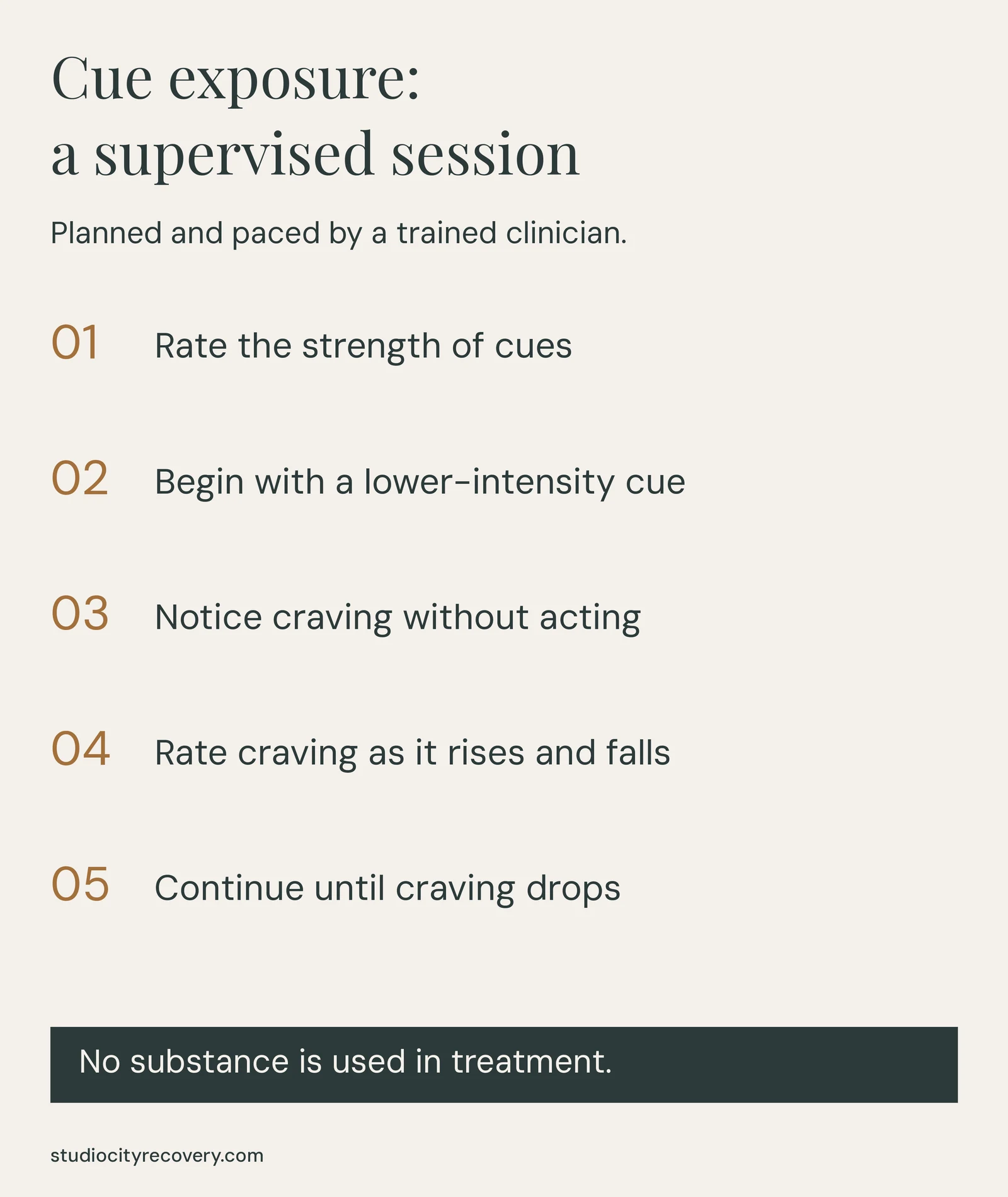
A session follows a structured sequence. 5 typical steps:
- The therapist and client rate the strength of different cues.
- The client is exposed to a lower-intensity cue first.
- The client notices craving without acting on it.
- The craving is rated again as it rises and falls.
- Exposure continues until the craving drops noticeably.
Is Exposure Therapy Effective for Addiction?
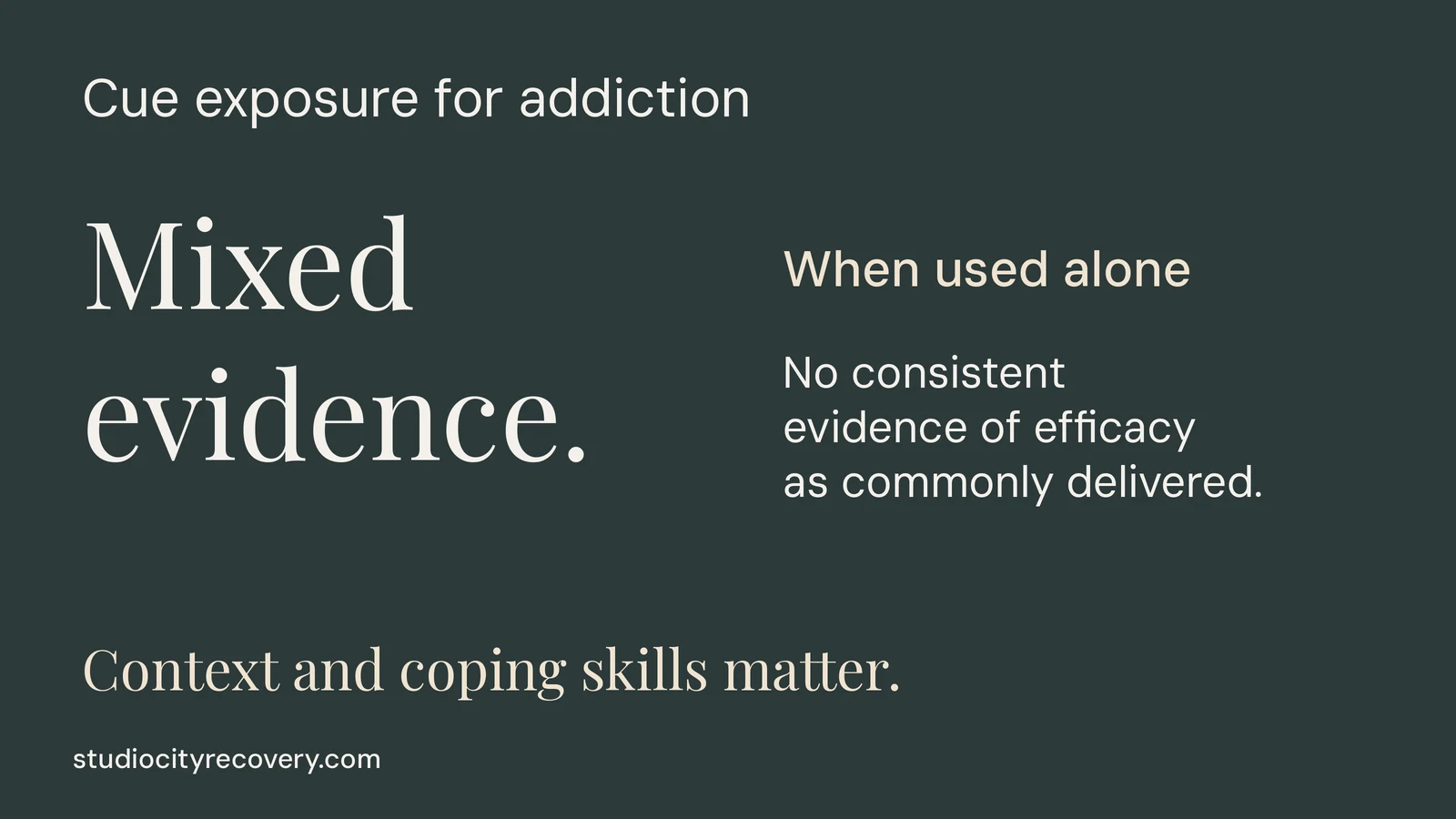
Exposure therapy has mixed evidence for addiction when used alone. A meta-analysis of cue exposure studies found no consistent evidence of efficacy as the treatment was commonly delivered, according to research published in Addiction. The authors linked weak results to how and where the exposure happened, not to the theory behind it.
Why Does Context Matter So Much?
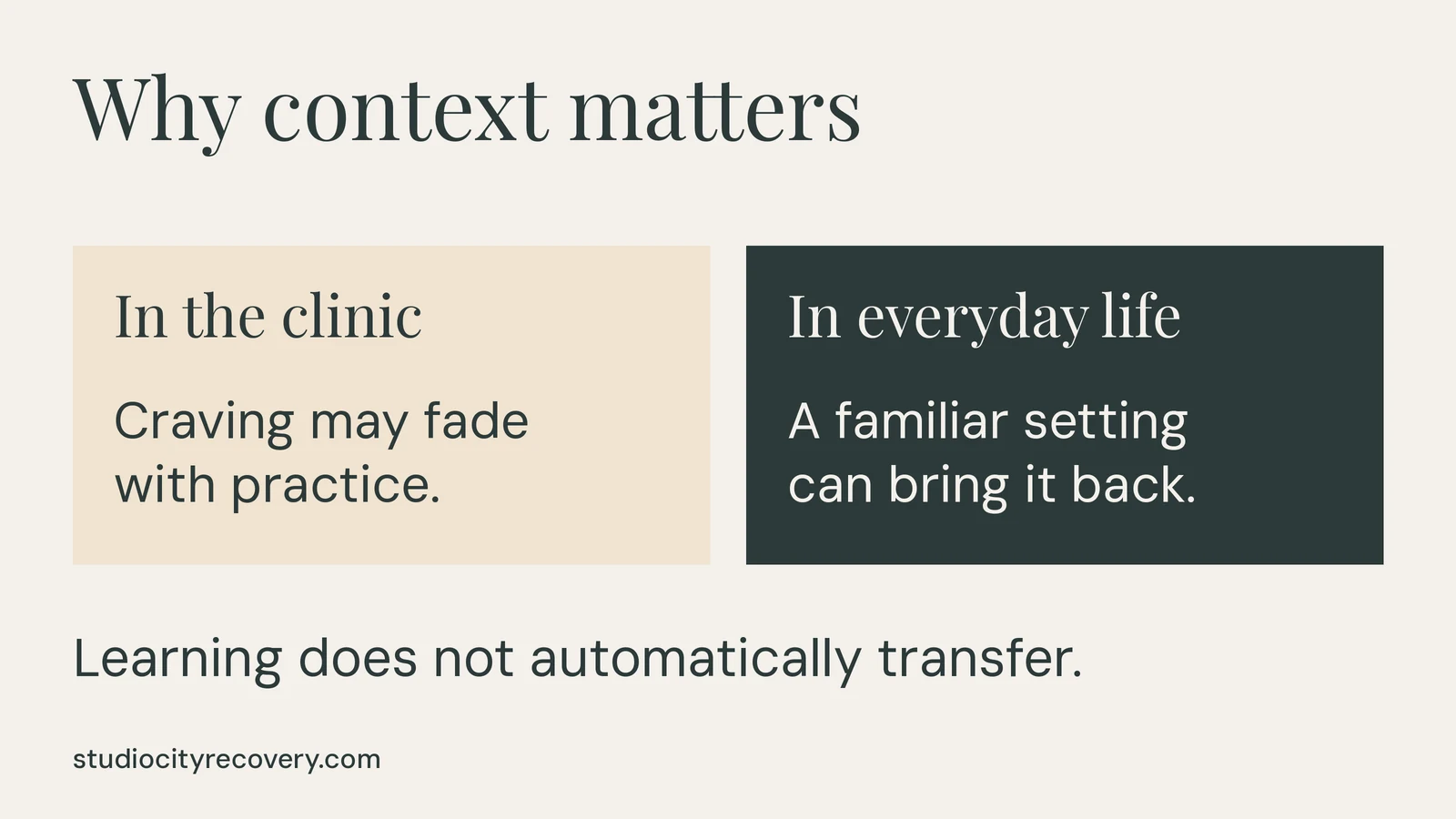
Context matters because extinction learned in a clinic does not automatically transfer to real life. A craving that fades in a therapy office can return at home, at work, or in a familiar bar. Researchers call this the renewal effect.
How Do Clinicians Strengthen Exposure Work?
Clinicians strengthen exposure work by pairing it with coping skills and varying the settings. 4 common methods:
- Practicing exposure in multiple environments.
- Teaching urge-management skills before and during exposure.
- Using imagery and virtual cues that resemble real situations.
- Combining exposure with structured relapse prevention planning.
How Is Exposure Therapy Different From Exposure Therapy for Anxiety?
Exposure therapy for anxiety targets fear, while cue exposure for addiction targets craving. Exposure for phobias and anxiety disorders has a stronger research base. The addiction version borrows the same principle but faces a harder problem, since craving is tied to reward rather than threat.
Which Approaches Pair Well With Exposure Work?
Several approaches pair well with exposure work because they build the skills a person needs when a craving hits:
- Cognitive Behavioral Therapy (CBT) challenges the thoughts that follow a trigger.
- Dialectical Behavioral Therapy (DBT) builds distress tolerance for intense urges.
- Meditation trains attention to notice cravings without acting.
How does mindfulness help with cravings explains how awareness weakens the urge-to-action link. What are common triggers for relapse helps identify which cues matter most for each person.
Who Is a Good Candidate for Exposure-Based Work?
Good candidates are people who are medically stable, past acute withdrawal, and have basic coping skills in place. Exposure is usually introduced later in treatment rather than in the first days of detox, when cravings and physical symptoms are already intense.
Who Should Avoid It?
Exposure-based work is usually postponed for 4 groups:
- People still in acute withdrawal or medically unstable.
- People with untreated psychosis or severe dissociation.
- People in crisis, including active suicidal thoughts.
- People who have not yet learned any urge-management skills.
Is Exposure Therapy Safe?
Exposure therapy is safe when it is planned and supervised by a trained clinician. Sessions are paced to the client’s tolerance, and no substance is ever used during treatment.
How Does Studio City Recovery Address Triggers and Cravings?
Studio City Recovery treats triggers and cravings through evidence-based therapy in a structured setting. Our 28 and 30 day drug and alcohol rehab combines individual therapy and group therapy with relapse prevention planning. Call (866) 995-8755.