
Featured image: AI-generated editorial illustration. Readiness and movement through stages are not a neat line.
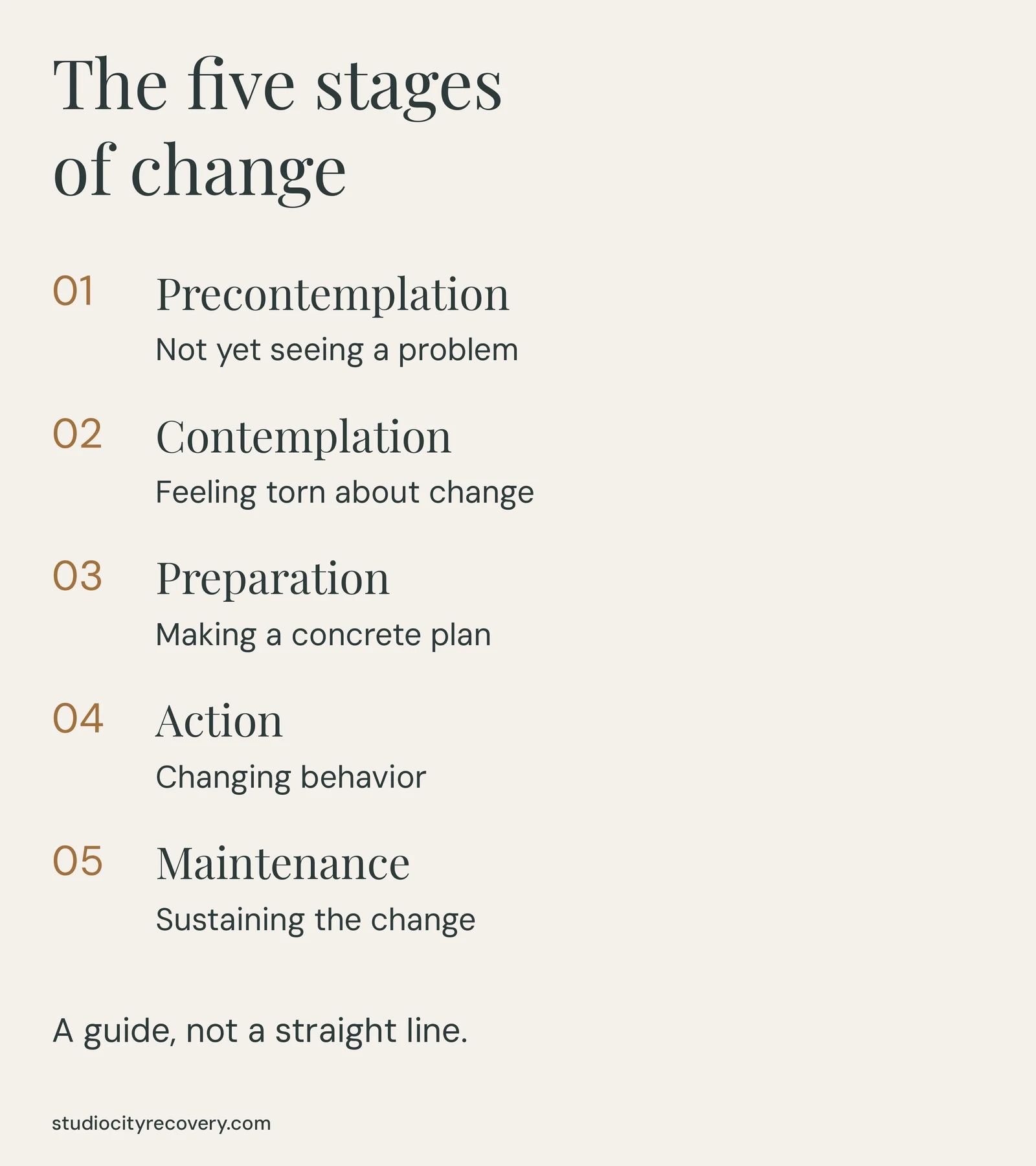
The stages of change are 5 phases people move through when changing a behavior like substance use: precontemplation, contemplation, preparation, action, and maintenance. The model was developed by psychologists James Prochaska and Carlo DiClemente and is part of the transtheoretical model of change. Treatment teams use it to match care to how ready a person is to change.
What Are the 5 Stages of Change?
The 5 stages describe readiness, not willpower. Each one calls for a different kind of support.
Stage 1: What Is Precontemplation?
Precontemplation is the stage where a person does not yet see their substance use as a problem. Family members may be worried, but the person tends to minimize consequences or avoid the topic entirely. Pressure usually backfires here.
Stage 2: What Is Contemplation?
Contemplation is the stage where a person recognizes the problem but feels torn about changing it. Ambivalence defines this stage. The person can list reasons to quit and reasons to keep using, and may stay here for months.
Stage 3: What Is Preparation?
Preparation is the stage where a person decides to change and starts planning. Common signs include researching treatment options, calling about insurance, or setting a quit date within the next month.
Stage 4: What Is Action?
Action is the stage where a person actively changes behavior, such as entering detox, starting residential treatment, or attending therapy. This stage demands the most energy and the most structure.
Stage 5: What Is Maintenance?
Maintenance is the stage where a person works to sustain the change and prevent relapse. It typically begins about 6 months after action starts and can continue for years.
Is Relapse Part of the Stages of Change?
Relapse is treated as a common event within the model, not a failure of it. Many people cycle through the stages several times before change holds. A return to use usually sends a person back to contemplation or preparation, not all the way to the start.
Does a Person’s Stage Affect Treatment Outcomes?
A person’s stage affects outcomes in a measurable way. A meta-analysis of 76 studies with 25,917 patients found that people further along the stages before treatment had better outcomes, according to research published in the Journal of Clinical Psychology.
How Do Clinicians Match Treatment to Each Stage?
Clinicians match treatment to each stage with different tools. 5 examples:
- Precontemplation: nonjudgmental education about risks and effects.
- Contemplation: motivational interviewing in addiction treatment to resolve ambivalence.
- Preparation: a concrete plan, including detox and admission logistics.
- Action: structured therapy such as Cognitive Behavioral Therapy (CBT) and individual therapy.
- Maintenance: relapse prevention skills and aftercare.
What Signs Show Someone Is Moving to the Next Stage?
Movement between stages usually shows up in language before big decisions. 4 signs worth noticing:
- Talking about the future without substances in it.
- Asking specific questions about treatment, cost, or time off work.
- Cutting back on use or avoiding certain triggers on their own.
- Accepting help with small steps, such as a phone call or assessment.
What Are the Limits of the Stages of Change Model?
The model has limits that clinicians keep in mind. Real people rarely move through the stages in a neat line, and they can show signs of 2 stages at once. The stages work best as a guide for conversation, not a rigid label.
How Can Families Use the Stages of Change?
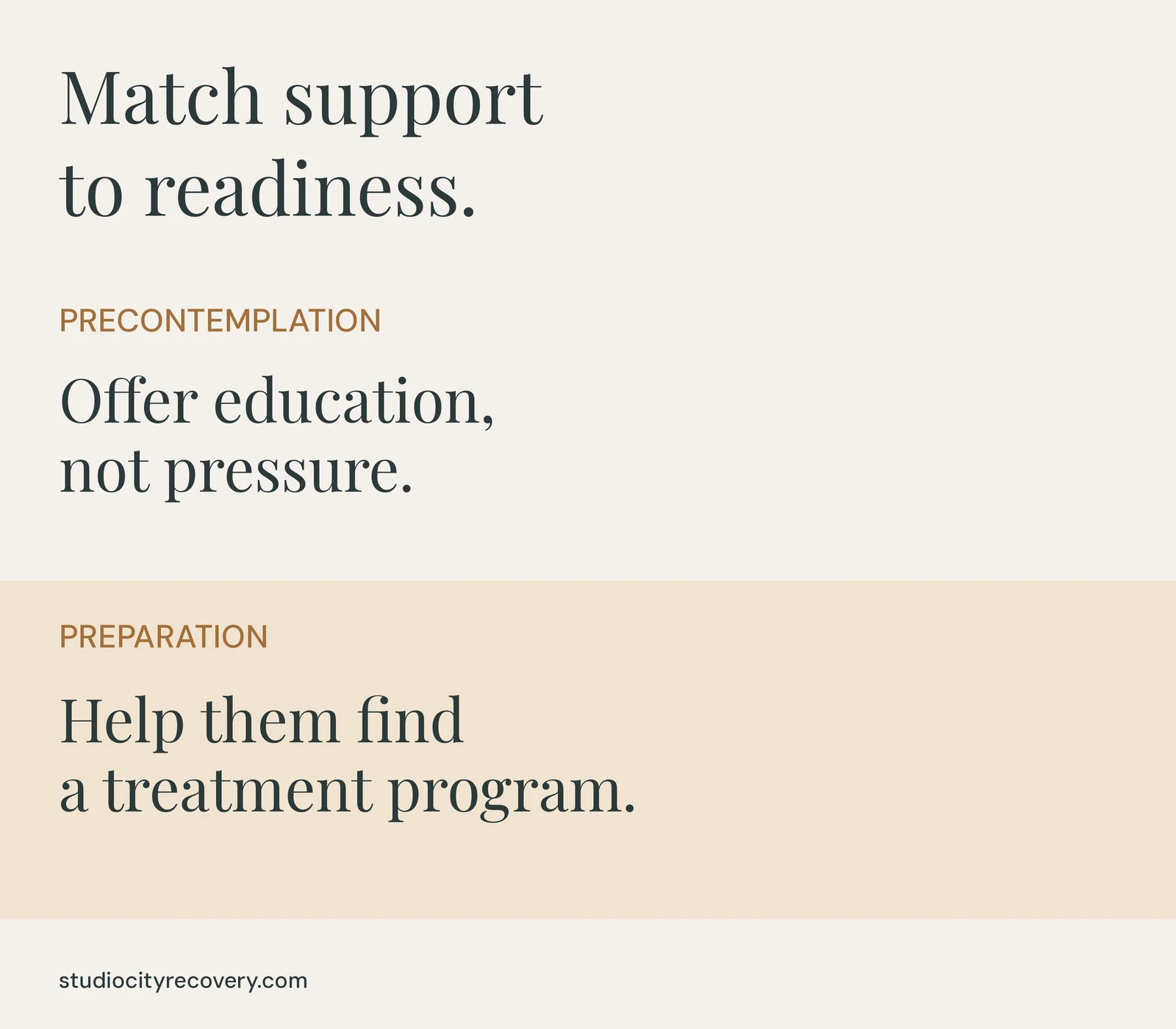
Families can use the stages to respond with the right kind of support. Pushing someone in precontemplation toward rehab often creates resistance, while helping someone in preparation find a program can speed things up. How to stop enabling a family member’s addiction and family therapy give loved ones a practical role at every stage.
What Helps During Maintenance?
Maintenance depends on a plan that continues after treatment ends. What should an aftercare plan include after leaving rehab covers the supports that hold this stage together.
How Does Studio City Recovery Support Every Stage?
Studio City Recovery supports people at whatever stage they are in when they call. Our 28 and 30 day drug and alcohol rehab provides structure for the action stage, and co-occurring disorder treatment addresses the mental health conditions that keep people stuck. Call (866) 995-8755 to talk through where you are.