.svg)


Cover image: Illustrative stock photograph, not an SCR location or a documented treatment session. No patient, clinician or client identity is asserted. Photo by Van Tay Media on Unsplash
Choosing a rehab facility comes down to 7 verifiable criteria rather than marketing. Accreditation, licensed clinical staff, on-site medical detox, and a written aftercare plan separate strong programs from weak ones.
What Are the 7 Criteria That Matter?
Evaluate every facility against the same 7 points.
- State licensure and independent accreditation.
- Medical detox available on site or through a formal partnership.
- Licensed clinicians rather than only certified coaches.
- Treatment for co-occurring mental health conditions.
- Evidence-based therapies named specifically, not described vaguely.
- A written aftercare plan produced before discharge.
- Transparent pricing and insurance verification in writing.
Why Does Accreditation Matter?
Accreditation means an outside body has reviewed clinical practices, safety, and record keeping against published standards. Two accreditors carry weight in this field.
- The Joint Commission.
- CARF International.
Is Licensure Enough on Its Own?
State licensure is the minimum standard rather than a mark of quality. Accreditation is the signal that a program invited outside scrutiny and passed it, which is a meaningfully higher bar.
What Should You Ask on the Call?
Ten questions surface the difference between programs that look similar online.
- What is your staff-to-patient ratio?
- Who performs the clinical assessment, and what are their credentials?
- Is medical detox provided on site?
- How do you treat co-occurring depression, anxiety, or trauma?
- Which specific therapies are used, and how often?
- What does a typical day look like?
- What is the total cost, and what is not included?
- What does aftercare include, and for how long?
- What is your policy if someone relapses after discharge?
- Can I speak with a clinician before admitting?
What Are the Warning Signs?
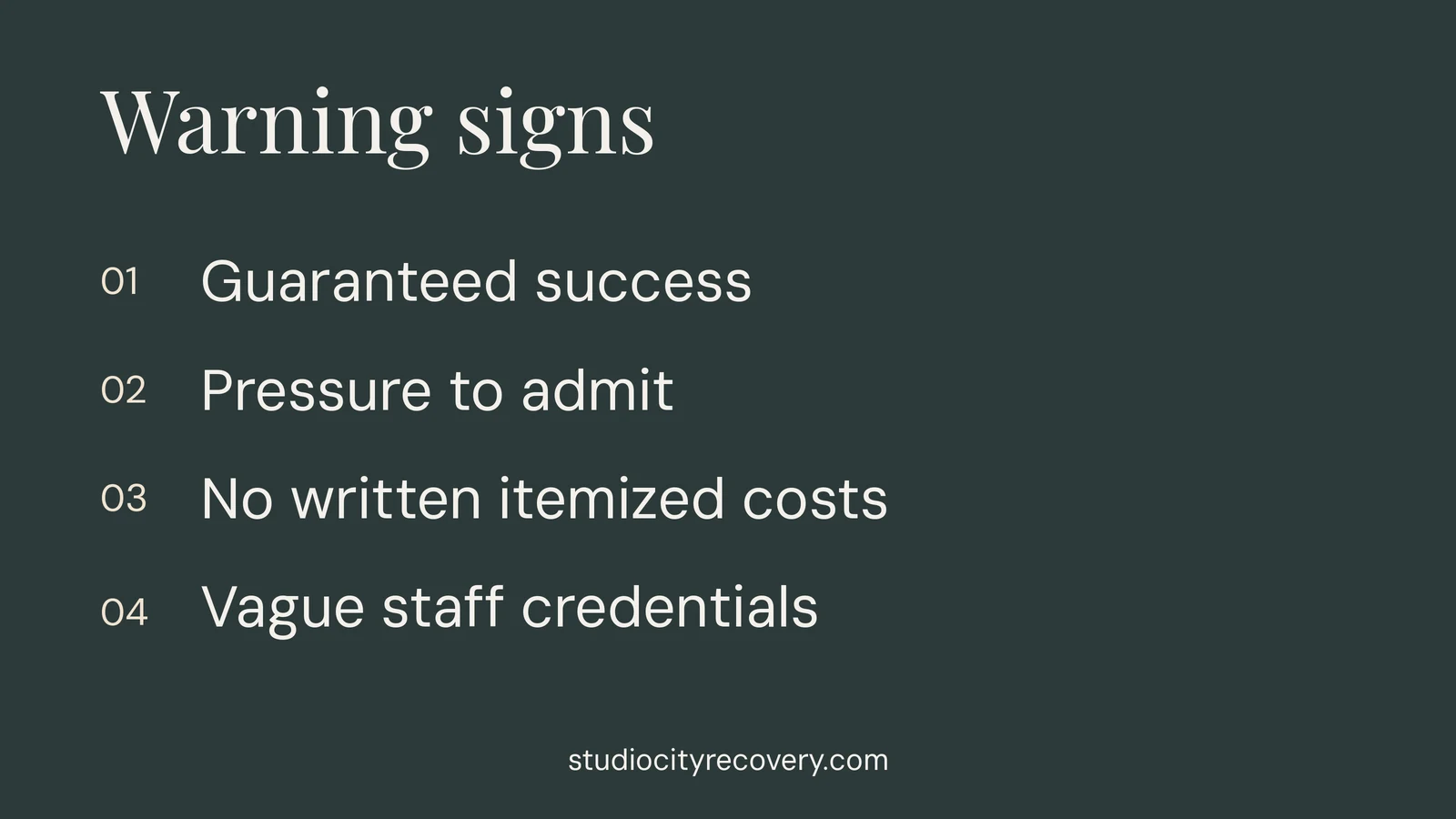
Four signals warrant walking away.
- Guaranteed success rates, which no legitimate program can promise.
- Pressure to admit today without a clinical assessment.
- Refusal to itemize costs in writing.
- Vague answers about staff credentials.
Does Success Rate Data Mean Anything?
Published success rates are not standardized across the industry and are rarely comparable. Ask instead how outcomes are measured and over what period, which is a question weak programs cannot answer.
How Do You Compare Two Finalists?
Once the list is down to 2 programs, comparison gets concrete. Five points separate them.
- Clinical hours per week, not amenities per brochure.
- Named therapies with session frequency attached.
- Whether a psychiatrist is on staff or contracted.
- What discharge planning produces in writing.
- Who answers the phone at 9pm after discharge.
Should You Tour the Facility?
Tour when distance allows, and ask to see the group rooms rather than the lobby. Programs that show only amenities are telling you where they invest.
What About Cost and Coverage?
Cost varies with level of care, length of stay, and setting. Our breakdown of how much rehab costs and how people pay for it covers insurance, private pay, and financing.
Does Length of Stay Matter?
Length of stay matters to outcomes more than families expect, and it is addressed in why long-term treatment programs have higher success rates.
Where to Start Comparing
Review our clinical team and setting on the about page, then compare formats under inpatient treatment to see which level of care matches the assessment.
What Should the Aftercare Plan Contain?
A written aftercare plan is the strongest single predictor of whether the gains hold. Five elements belong in it.
- A named outpatient therapist with a first appointment already booked.
- A psychiatric follow-up date if medication is involved.
- A support group schedule and location.
- A written relapse response plan with named contacts.
- A sober living referral where the home environment is unstable.
A phone list is not a plan.
Frequently Asked Questions
Should you choose a facility close to home?
Distance has tradeoffs. Being far away removes access to familiar triggers and suppliers, while being close simplifies family involvement and aftercare. The clinical picture should decide it.
How long should treatment last?
Research links longer engagement to better outcomes, and 30 days is a starting point rather than a finish line. Programs that plan for step-down care perform better than those that end at discharge.
Does a luxury facility mean better treatment?
Not automatically. Amenities and clinical quality are separate variables, and the 7 criteria above apply regardless of setting. Comfort supports engagement without replacing credentialed staff.