Featured image: AI-generated illustrative image. Not a real patient, clinician, or Studio City Recovery facility. AI-generated illustration via Higgsfield
The ASAM levels of care are a standardized scale from the American Society of Addiction Medicine that matches each person to the right intensity of addiction treatment. The scale runs from outpatient care at the low end to medically managed inpatient care at the top. Treatment teams use it so placement decisions follow clinical need, not guesswork or convenience.
What Are the Main ASAM Levels?
The ASAM continuum has 4 main levels, each with sublevels.
-
Level 1: Outpatient services, usually fewer than 9 hours of treatment per week.
-
Level 2: Intensive outpatient and partial hospitalization.
-
Level 3: Residential treatment with 24-hour structure.
-
Level 4: Medically managed intensive inpatient care in a hospital setting.

What Are the Most Common Sublevels?
5 sublevels come up most often in placement:
-
Level 2.1: Intensive outpatient, at least 9 hours per week.
-
Level 2.5: Partial hospitalization, at least 20 hours per week.
-
Level 3.1: Clinically managed low-intensity residential care.
-
Level 3.5: Clinically managed high-intensity residential care.
-
Level 3.7: Residential care with 24-hour nursing and physician oversight.
The outpatient tiers are compared in what is the difference between PHP and IOP in addiction treatment.
How Does ASAM Decide the Right Level?
ASAM uses 6 dimensions to assess each person.
-
Acute intoxication and withdrawal potential.
-
Biomedical conditions and complications.
-
Emotional, behavioral, or cognitive conditions.
-
Readiness to change.
-
Relapse or continued use potential.
-
Recovery environment.
What Happens in the Assessment?
A clinician scores each dimension during intake and recommends the least intensive level that is still safe and effective. A person with severe withdrawal risk and an unsafe home, for example, needs a higher level than someone with mild symptoms and strong family support. The process is described in what happens in a clinical assessment before rehab.
What Does Level 3.7 Mean at Studio City Recovery?
Level 3.7 means Studio City Recovery provides residential treatment with medical monitoring around the clock. Studio City Recovery holds ASAM Level 3.7 certification through CARF. That makes it appropriate for people who need withdrawal management alongside daily therapy, without a hospital stay. Whether detox comes first is explained in do you need detox before rehab.
Can You Move Between Levels?
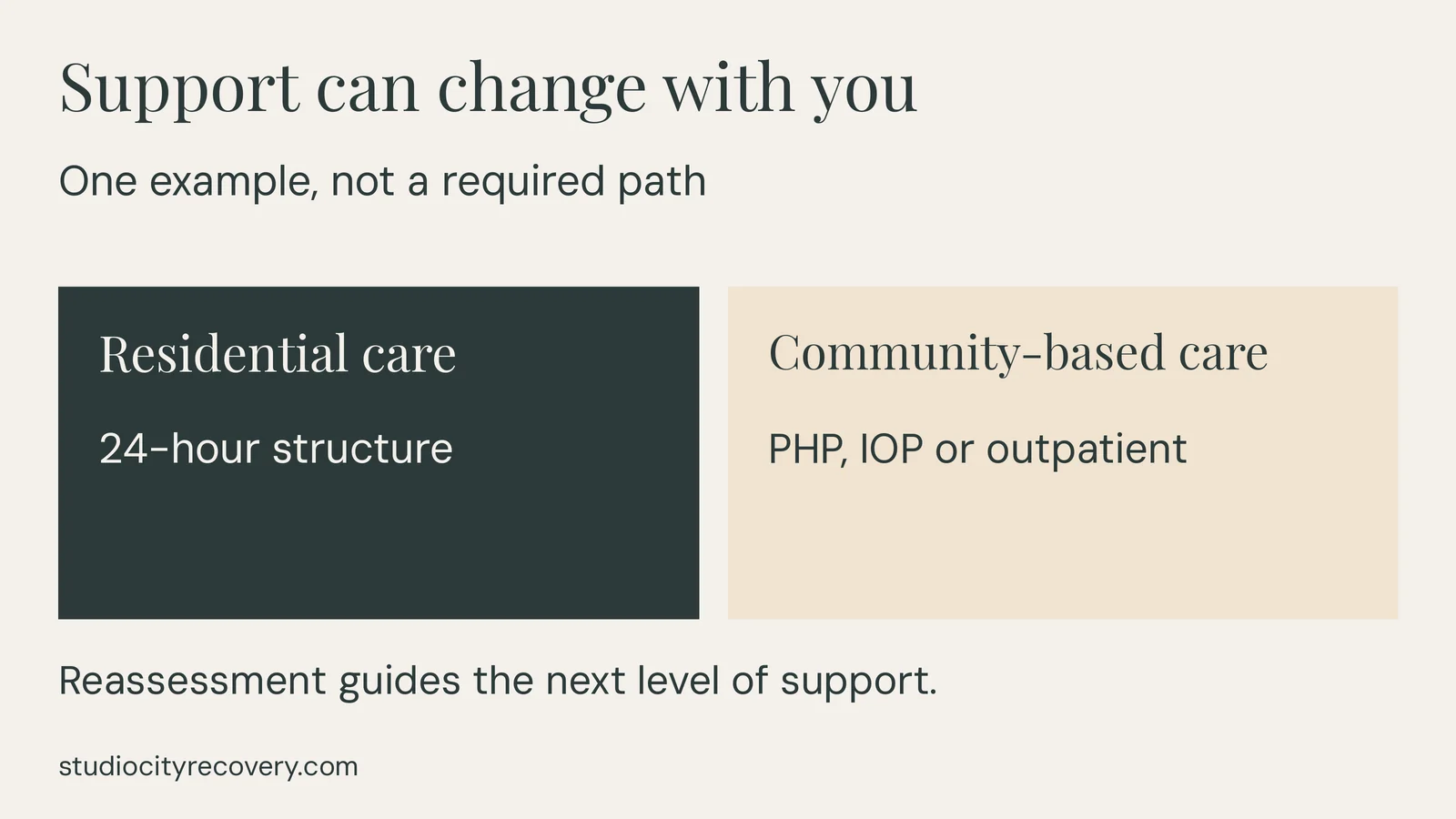
You can move between levels as your needs change. ASAM treats placement as a continuum, not a one-time decision. A common path has 4 stages:
-
Residential care at Level 3.7.
-
Step-down to partial hospitalization.
-
Intensive outpatient while returning to work.
-
Standard outpatient care and aftercare.
Does Insurance Use ASAM Criteria?
Insurance companies often use ASAM criteria to approve or deny a level of care. Clinical documentation that maps to the 6 dimensions strengthens authorization requests and appeals, as covered in does insurance cover rehab.
What Changed in the Fourth Edition?
The fourth edition of The ASAM Criteria, released in 2023, refined the residential and outpatient sublevels and placed more emphasis on co-occurring mental health conditions and on medication for addiction treatment. The core idea stayed the same, which is to match treatment intensity to clinical need.
Why Does the Right Level of Care Matter?
The right level of care matters because both overtreatment and undertreatment cause problems. Too little support leaves people exposed to withdrawal complications and early relapse. Too much can pull people away from work and family longer than necessary. Correct placement keeps treatment safe, effective, and realistic.
How Does Studio City Recovery Use ASAM?
Studio City Recovery uses ASAM criteria at intake to place each client in the right level of care. Our 28 and 30 day drug and alcohol rehab delivers Level 3.7 residential treatment, with tracks for executive drug and alcohol rehab and our luxury California drug and alcohol retreat. Clients with mental health needs receive co-occurring disorder treatment. Book your stay to start an assessment.
Frequently Asked Questions
Is Level 4 the Same as Detox?
Not always. Level 4 is hospital-based care for severe medical needs. Most people complete withdrawal management at a residential level like 3.7.
Who Decides the Level of Care?
A licensed clinician makes the recommendation after a full assessment, with input from the client and, when appropriate, family.