
Featured image: Illustrative generated scene, not a real client.
REBT, or Rational Emotive Behavior Therapy, is a form of cognitive behavioral therapy that teaches people to identify and dispute the irrational beliefs behind their emotional distress. Psychologist Albert Ellis developed it in 1955, making it one of the earliest cognitive therapies. In addiction treatment, REBT targets the beliefs that make substance use feel necessary.
What Is the ABC Model in REBT?
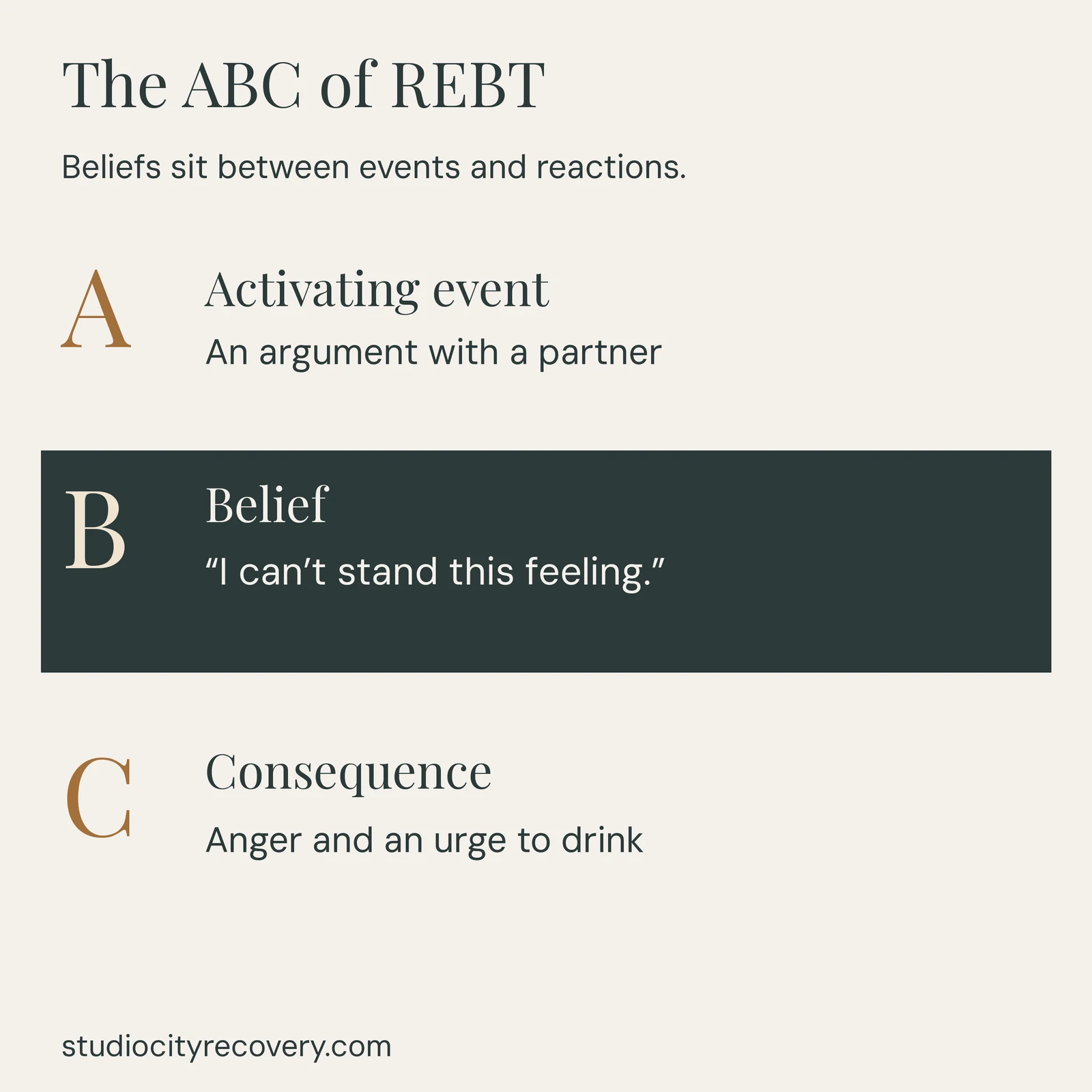
The ABC model is the foundation of REBT. It explains how events lead to emotions through beliefs:
- A is the activating event, such as an argument with a partner.
- B is the belief about the event, such as “I can’t stand this feeling.”
- C is the consequence, such as intense anger and the urge to drink.
What Are D and E?
REBT extends the model with 2 more steps:
- D is disputing, where the belief is questioned and tested against evidence.
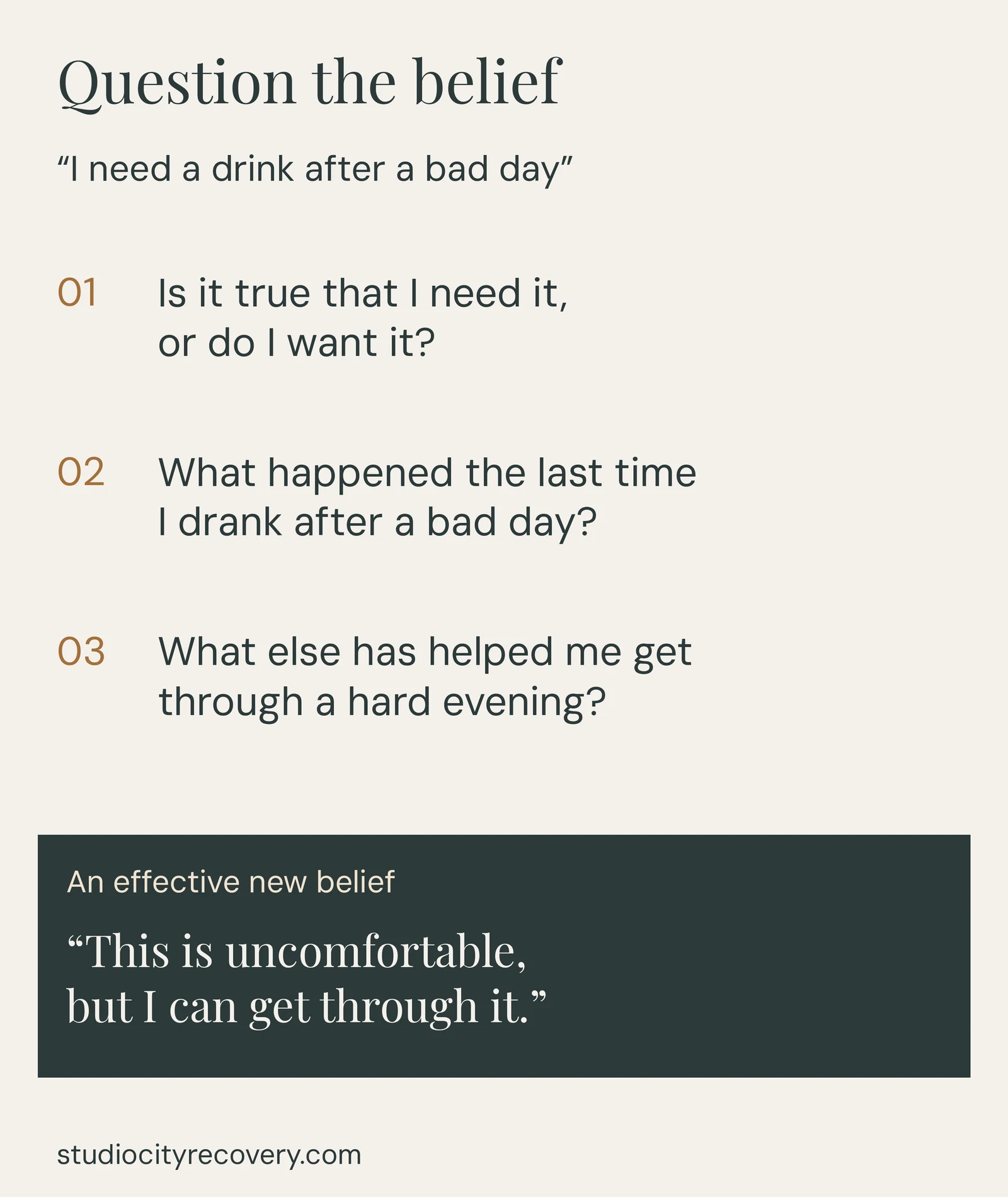
- E is the effective new belief, such as “This is uncomfortable, but I can get through it.”
The key insight is that A does not directly cause C. The belief in the middle does most of the work, and beliefs can be changed.
What Irrational Beliefs Does REBT Target?
REBT targets 4 types of irrational beliefs that commonly fuel substance use:
- Demands, such as “I must feel good right now.”
- Awfulizing, such as “This is the worst thing that could happen.”
- Low frustration tolerance, such as “I can’t stand this craving.”
- Global self-rating, such as “I relapsed, so I am worthless.”
What Is Low Frustration Tolerance?
Low frustration tolerance is the belief that discomfort is unbearable. It is one of the most important targets in addiction treatment, because cravings, withdrawal, and difficult emotions are all uncomfortable. REBT helps clients learn that discomfort can be tolerated without using.
What Is Unconditional Self-Acceptance?
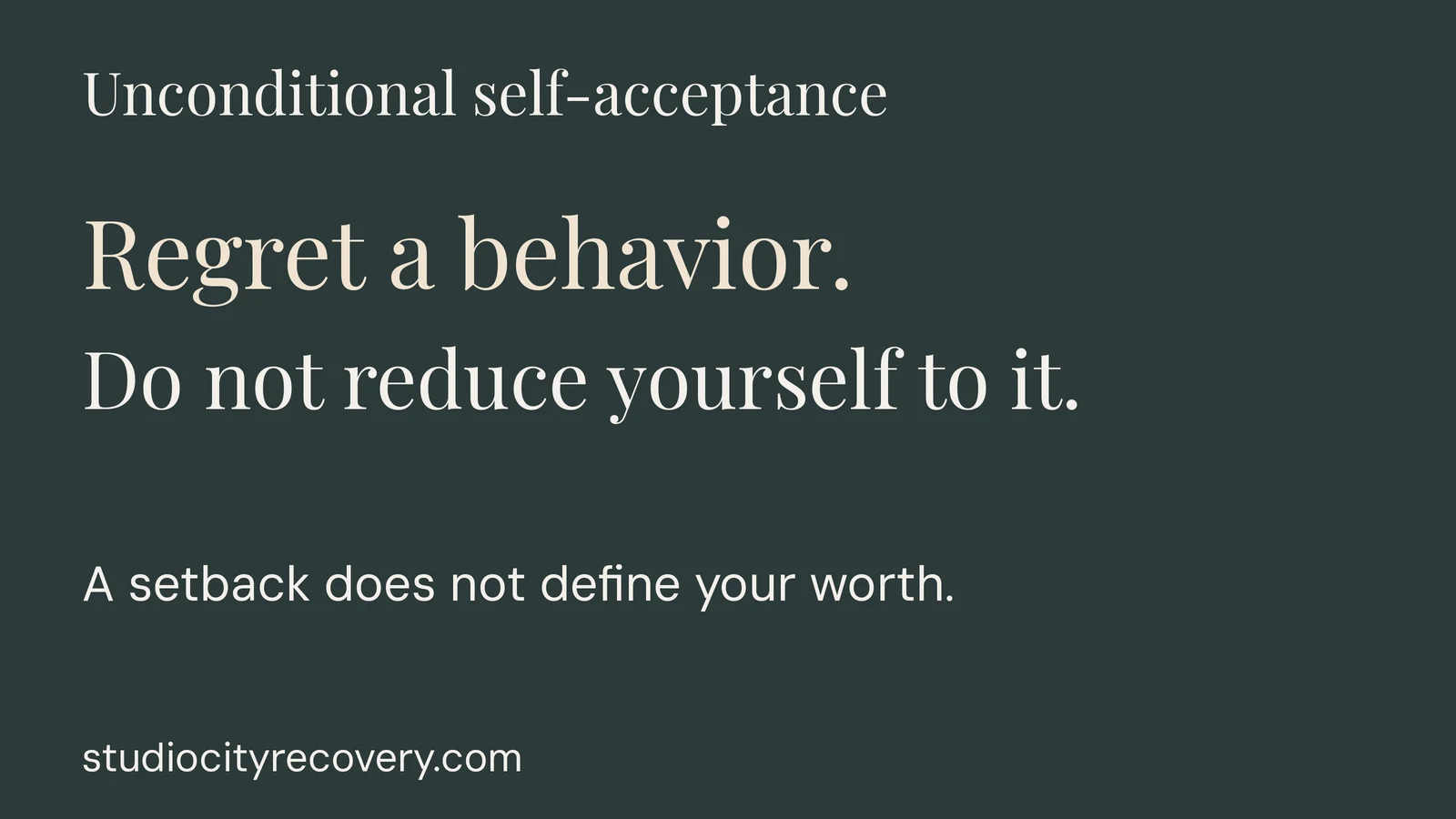
Unconditional self-acceptance is the REBT principle that a person’s worth is not defined by their behavior. Someone can regret a relapse without concluding they are a failure as a person. This reduces the shame spiral that often follows a slip.
How Does REBT Help With Addiction?
REBT helps with addiction by changing the thinking that comes before use. 3 specific benefits:
- It weakens the belief that cravings must be obeyed.
- It reduces guilt and shame after mistakes, which lowers relapse risk.
- It gives clients a repeatable process for handling stressful events.
What Does REBT Look Like in a Session?
An REBT session is active and direct. The therapist helps the client identify a recent trigger, uncover the belief behind their reaction, and dispute it with questions like “Where is the evidence?” and “Is this belief helping you?” Clients usually leave with homework to practice disputing on their own.
What Is an Example of Disputing a Belief?
A client who thinks “I need a drink after a bad day” can dispute that belief with 3 questions:
- Is it true that I need it, or do I want it?
- What happened the last time I drank after a bad day?
- What else has helped me get through a hard evening?
The answers usually turn a demand into a preference, which is far easier to resist.
How Is REBT Different From Standard CBT?
REBT and standard CBT share the same foundation but differ in emphasis. 2 main differences:
- REBT focuses heavily on demands and self-acceptance.
- Standard Cognitive Behavioral Therapy (CBT) focuses more broadly on thought patterns and behavior change.
Both are evidence-based, and many clinicians blend them. CBT thought records for challenging cravings uses a similar disputing process, and what is behavioral activation in CBT covers the behavioral side.
Can REBT Help With Co-Occurring Conditions?
REBT can help with co-occurring anxiety and depression because both are often driven by the same irrational beliefs. How does substance abuse affect mental health explains why the two conditions so often appear together.
How Does Studio City Recovery Use Cognitive Therapies?
Studio City Recovery builds cognitive approaches like REBT into a full clinical program. Individual therapy offers one-on-one disputing practice, group therapy lets clients rehearse new beliefs with peers, and co-occurring disorder treatment addresses anxiety and depression. Call (866) 995-8755.