
Featured image: Illustrative generated scene; not an actual Studio City Recovery client or facility.
Narrative therapy is a collaborative form of counseling that helps people separate themselves from their problems by examining and rewriting the stories they tell about their lives. It was developed by Michael White and David Epston in the 1980s. In addiction recovery, it helps clients see addiction as something they struggled with rather than who they are.
What Is the Core Idea Behind Narrative Therapy?
The core idea behind narrative therapy is that people make sense of their lives through stories, and some of those stories become harmful. A person who repeats “I am an addict and I always ruin everything” is living inside a story that leaves little room for change. Narrative therapy helps them find a more accurate and more useful one.
What Does “The Person Is Not the Problem” Mean?
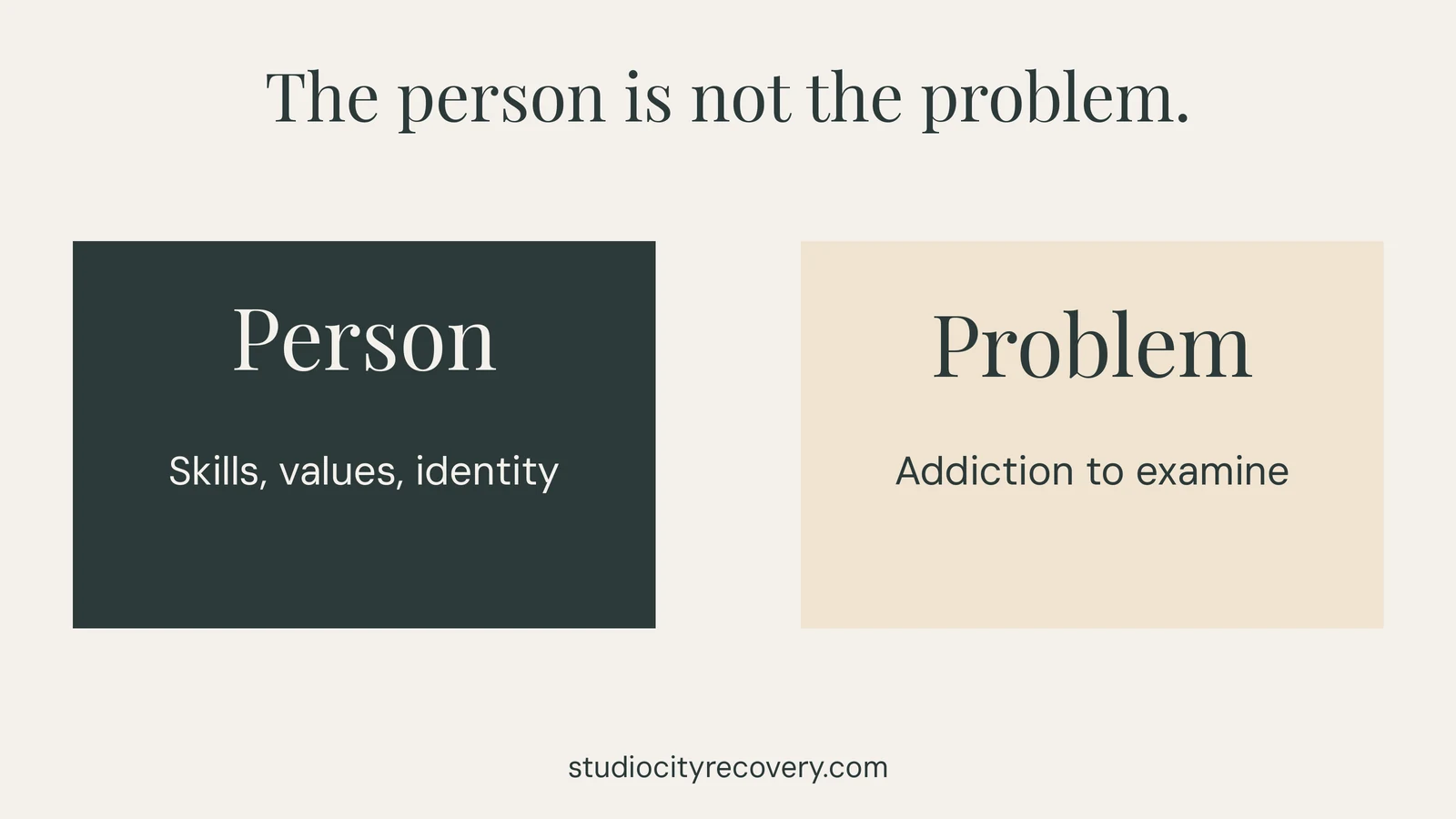
“The person is not the problem, the problem is the problem” is a central phrase in narrative therapy. It means the client and therapist look at addiction together, from the outside, instead of treating the client as broken.
What Are the Key Techniques in Narrative Therapy?
Narrative therapy uses 5 key techniques:
- Externalizing, which treats the problem as separate from the person.
- Deconstruction, which breaks a large, vague story into smaller parts that can be examined.
- Unique outcomes, which identify moments when the problem did not win.
- Re-authoring, which builds a new story from those overlooked moments.
- Outsider witnessing, which invites others to hear and reflect on the new story.
How Does Externalizing Work in Addiction Treatment?
Externalizing works by giving the addiction its own name and identity. A client might call it “the voice” or “the pull.” The therapist then asks questions like, “When does the pull get loudest?” and “What tactics does it use to convince you?” That framing reduces shame and makes the problem easier to study.
What Are Unique Outcomes?
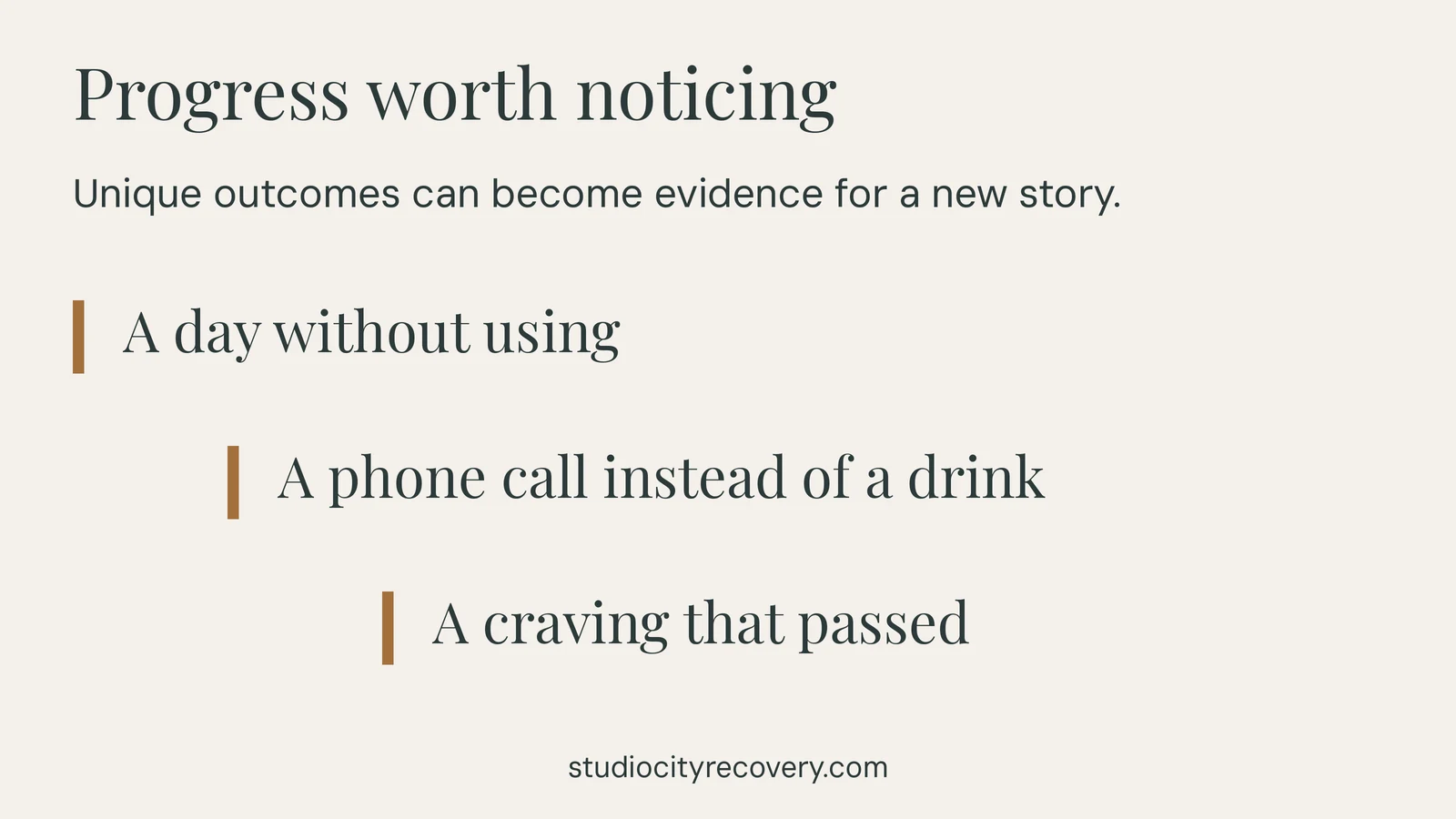
Unique outcomes are times when the client resisted the problem, even briefly. A day without using, a phone call made instead of a drink, or a craving that passed are all unique outcomes. They become evidence for a new story built on strength rather than failure.
How Does Narrative Therapy Help With Addiction?
Narrative therapy helps with addiction in 4 specific ways:
- It reduces shame by separating identity from behavior.
- It highlights skills and values the client already has.
- It gives clients language for the role addiction played in their life.
- It builds a hopeful story that supports long-term recovery.
What Questions Does a Narrative Therapist Ask?
A narrative therapist asks curious, open questions rather than giving advice. 3 common examples:
- “When has the addiction had less control over you?”
- “What does the addiction want you to believe about yourself?”
- “Who in your life would not be surprised by your recovery?”

How Is Narrative Therapy Different From CBT?
Narrative therapy differs from Cognitive Behavioral Therapy (CBT) in what it challenges. CBT targets specific distorted thoughts and replaces them with balanced ones. Narrative therapy targets the larger identity story that holds those thoughts together. Many clients benefit from both.
How Does This Build on Our Trauma and Addiction Guide?
Our guide to the connection between trauma and addiction introduces narrative therapy as one of several trauma approaches. This article goes deeper into the techniques and how they apply specifically to recovery identity.
How Does Narrative Therapy Help Trauma Survivors?
Narrative therapy helps trauma survivors by letting them tell their story at their own pace and from a position of strength. Instead of reliving the trauma, they examine how it shaped their beliefs about themselves and decide which beliefs to keep.
What Practices Support a New Recovery Story?
Several practices outside session help strengthen a new recovery story. Journal prompts to help you find yourself in recovery give structure to daily reflection. Challenging negative thought patterns in recovery helps catch old stories when they return.
How Does Studio City Recovery Help Clients Rewrite Their Story?
Studio City Recovery helps clients build a new identity alongside clinical treatment. Individual therapy provides space for narrative work, family therapy lets loved ones witness the new story, and co-occurring disorder treatment addresses trauma and depression. Call (866) 995-8755.