What Is Trauma-Informed Care in Addiction Treatment?

October 28, 2026
Trauma-informed care in addiction treatment is an approach that assumes many clients have experienced trauma and shapes every part of care to avoid re-traumatizing them. It is not a single therapy. It is a framework that guides how staff speak, how rules are set, and how treatment decisions are made across an entire program.
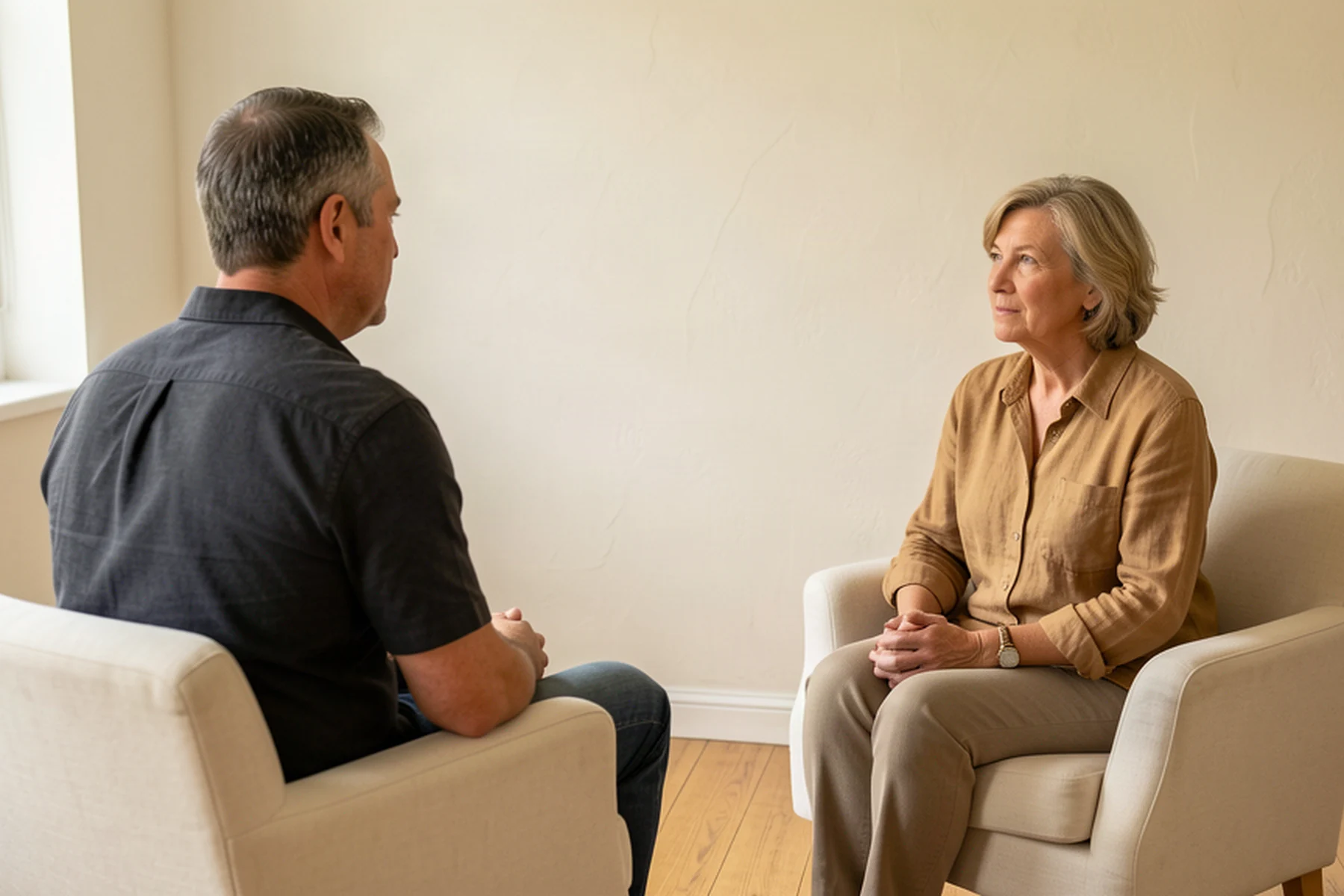
Two adults seated in a quiet room, facing each other in conversation.

Trauma-informed care in addiction treatment is an approach that assumes many clients have experienced trauma and shapes every part of care to avoid re-traumatizing them. It is not a single therapy. It is a framework that guides how staff speak, how rules are set, and how treatment decisions are made across an entire program.

How Is Trauma-Informed Care Different From Trauma Therapy?

Trauma-informed care and trauma therapy are related but different. 2 key distinctions:

  • Trauma therapy treats trauma directly, through methods like EMDR or somatic work.
  • Trauma-informed care shapes the whole environment so every client feels safe, whether or not they are in trauma therapy.

A program can offer trauma therapy without being trauma-informed, and a trauma-informed program supports clients who never discuss their trauma at all.
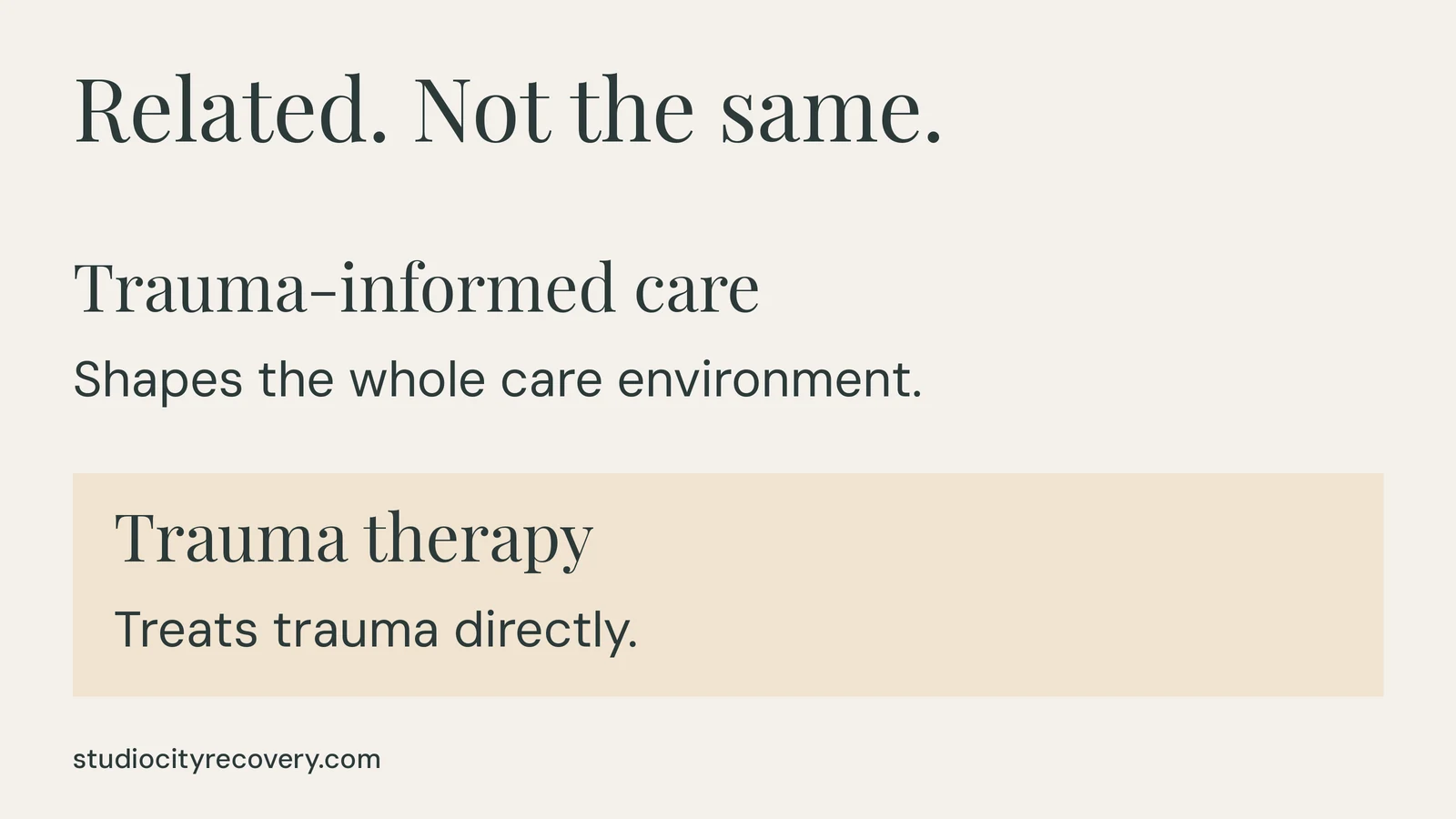
Trauma-informed care shapes the whole care environment, while trauma therapy treats trauma directly.
Trauma-informed care shapes the environment; trauma therapy directly treats trauma.

What Are the 6 Principles of Trauma-Informed Care?

The 6 principles of trauma-informed care come from the Substance Abuse and Mental Health Services Administration:

  • Safety, both physical and emotional, for clients and staff.
  • Trustworthiness and transparency in decisions and rules.
  • Peer support from people with lived experience.
  • Collaboration and mutuality between clients and staff.
  • Empowerment, voice, and choice in treatment planning.
  • Cultural, historical, and gender considerations.

What Does Safety Look Like in Practice?

Safety in practice means predictable schedules, clear explanations before any procedure, and private spaces for difficult conversations. Clients know what will happen next and why.

What Does Trustworthiness Look Like in Practice?

Trustworthiness in practice means staff do what they say they will do. Rules are explained, not just enforced, and changes to a treatment plan are discussed with the client before they happen. Consistency matters more than warmth alone, because trauma survivors often watch closely for broken promises.

What Does Peer Support Look Like in Practice?

Peer support in practice means clients hear from people who have lived through similar experiences. Group therapy and alumni connections show that recovery from both trauma and addiction is possible.

What Does Empowerment Look Like in Practice?

Empowerment in practice means clients help shape their own goals. Instead of being told what treatment they will receive, they are offered options and asked what has helped or harmed them before.

What Are the 4 R’s of Trauma-Informed Care?

The 4 R’s describe what a trauma-informed program does at every level:

  1. Realize how widespread trauma is and how it affects recovery.
  2. Recognize the signs of trauma in clients and staff.
  3. Respond by building trauma awareness into policies and practice.
  4. Resist re-traumatization in every interaction.
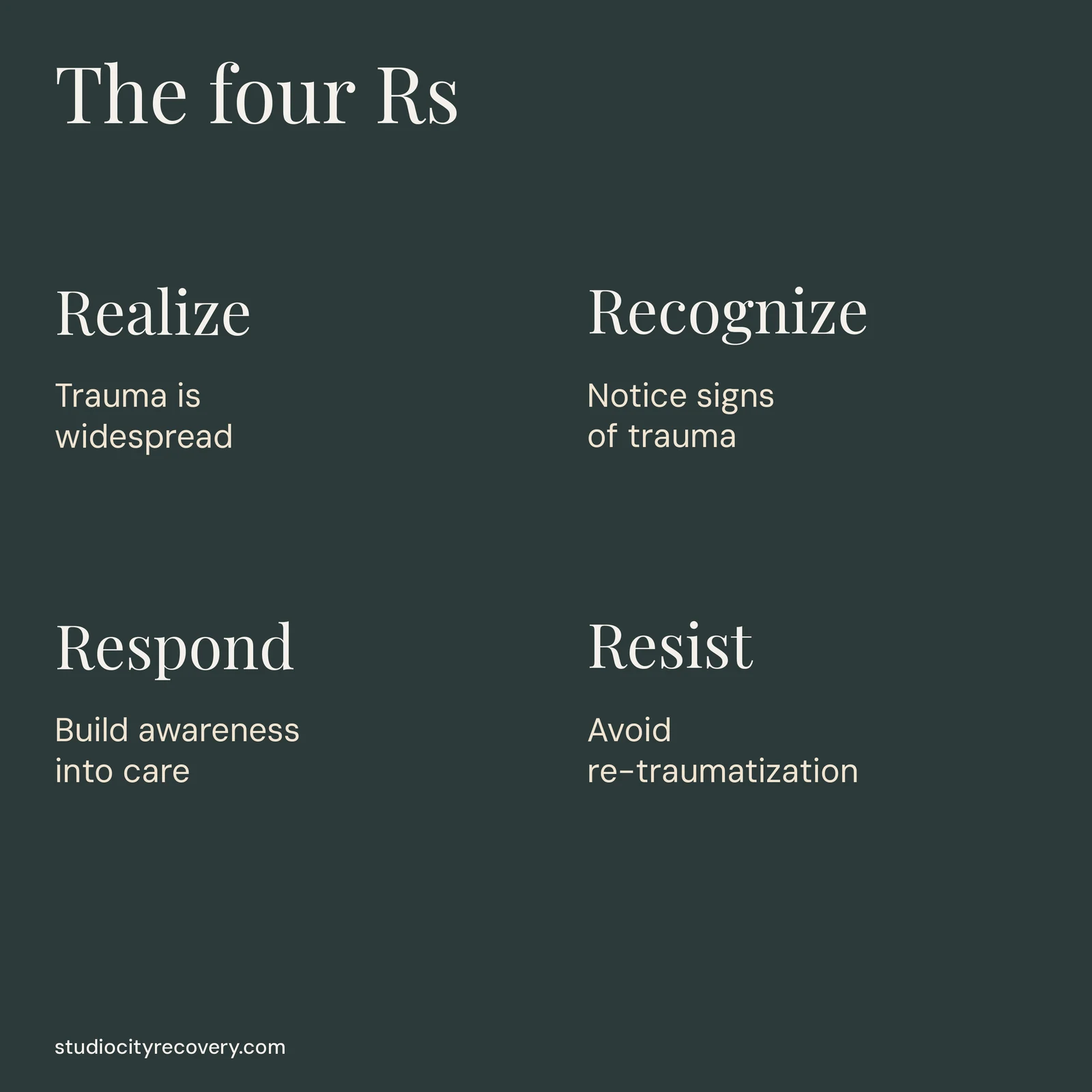
The four Rs of trauma-informed care: realize, recognize, respond, and resist re-traumatization.
A trauma-informed program realizes, recognizes, responds and resists re-traumatization.

Why Does Trauma-Informed Care Matter in Addiction Treatment?

Trauma-informed care matters because substance use often begins as a way to cope with trauma symptoms. A confrontational or rigid program can trigger the same fear and shame a person was trying to escape. That increases the chance they leave treatment early.

What Does Re-Traumatization Look Like?

Re-traumatization can happen through ordinary moments. 4 examples a trauma-informed program avoids:

  • Searches or procedures done without explanation or consent.
  • Shaming language in groups or individual sessions.
  • Rigid rules enforced without context or flexibility.
  • Forcing a client to retell traumatic details before they are ready.

How Is Trauma-Informed Care Different From Our Trauma and Addiction Overview?

Our article on the connection between trauma and addiction explains why trauma drives substance use. This guide focuses on how a program is designed so clients feel safe enough to heal.

Which Therapies Fit Inside a Trauma-Informed Program?

Several therapies fit naturally inside a trauma-informed program. EMDR therapy for addiction processes traumatic memories, and somatic experiencing therapy works through body sensation. Dialectical Behavioral Therapy (DBT) builds the emotional regulation skills trauma survivors often need first.

What Questions Should You Ask a Treatment Program?

You should ask any program 4 questions about trauma-informed care:

  1. How does your staff train in trauma-informed care?
  2. Can clients choose between male and female therapists?
  3. How do you handle a client who becomes overwhelmed in group?
  4. Is trauma processing required, or is it offered when a client is ready?
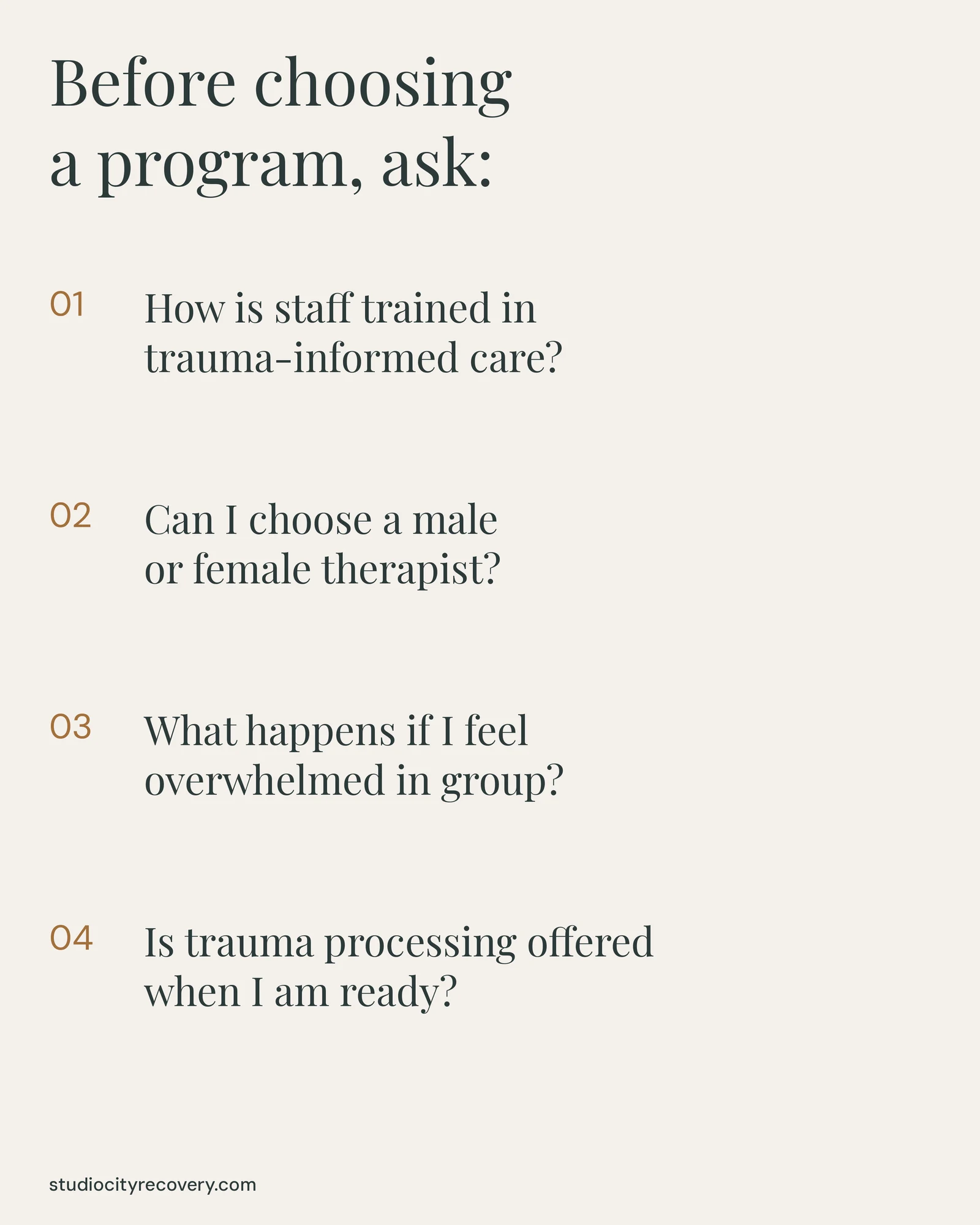
Four questions to ask a treatment program about staff training, therapist choice, group overwhelm, and trauma-processing readiness.
Four questions address training, therapist choice, overwhelm in group and readiness for trauma processing.

How Does Studio City Recovery Provide Trauma-Informed Care?

Studio City Recovery builds treatment around safety, choice, and collaboration. Co-occurring disorder treatment addresses PTSD and related conditions alongside addiction, and individual therapy lets clients set the pace. Our 28 and 30 day drug and alcohol rehab provides a stable setting. Call (866) 995-8755.


Recovery Starts Here

Our team of experienced professionals are here to help you shape your future.

book your stay

Testimonials

Our patients have lived the best of their lives here. Here’s what they had to say.

Image of brown curly brace brackets resembling a shape on white background.

"The owners don’t care about money. They care about recovery. They’re loving people that will accept you as their own child. They’ve saved my life."

Jonathan
|
1 month ago
Image of brown curly brace brackets resembling a shape on white background.

"This treatment center truly changed my life. From the moment I arrived, the staff and owners made me feel loved and cared for like family. They genuinely put their hearts into helping every single person who walks through the door. One thing I really appreciated was that they allowed me to have my phone, which helped me stay connected while still focusing on my recovery. The therapy sessions and case management were absolutely life-changing — they gave me the tools, guidance, and support I needed to not just get sober, but to stay sober after graduating. I can honestly say I wouldn’t be where I am today without this place. If you’re serious about recovery and want a program that truly cares about you, this is where you need to be."

Ryan E.
|
7 months ago
Image of brown curly brace brackets resembling a shape on white background.

"Choosing Studio City Recovery was the best decision I’ve ever made. When I first came in, I was struggling with addiction and didn’t believe I could change. The amazing team at this rehab center in Los Angeles gave me the support, structure, and encouragement I needed to completely transform my life.

The therapists and staff are truly experts in addiction treatment, offering personalized care that goes beyond the standard. From detox and therapy to group support and holistic healing, every part of the program gave me tools to rebuild my confidence and stay sober.

The facility in Studio City is beautiful, safe, and comfortable making it the perfect place to focus on recovery without distractions. Most importantly, the staff believed in me until I learned to believe in myself.

Today, I am proud of my sobriety and the life I am building. If you’re searching for the best drug rehab in Los Angeles or a trusted addiction recovery program in Studio City, I cannot recommend Studio City Recovery enough. This treatment center truly helps you take back your life."

Ejmin G.
|
7 months ago
Image of brown curly brace brackets resembling a shape on white background.

"This treatment center truly changed my life. From the moment I arrived, the staff and owners made me feel loved and cared for like family. They genuinely put their hearts into helping every single person who walks through the door. One thing I really appreciated was that they allowed me to have my phone, which helped me stay connected while still focusing on my recovery. The therapy sessions and case management were absolutely life-changing — they gave me the tools, guidance, and support I needed to not just get sober, but to stay sober after graduating. I can honestly say I wouldn’t be where I am today without this place. If you’re serious about recovery and want a program that truly cares about you, this is where you need to be."

Ryan E.
|
7 months ago
Image of brown curly brace brackets resembling a shape on white background.

"The owners don’t care about money. They care about recovery. They’re loving people that will accept you as their own child. They’ve saved my life."

Jonathan
|
1 month ago
Image of brown curly brace brackets resembling a shape on white background.

"Studio City Recovery is amazing! The owner and staff are super friendly and professional. Their services are top-notch and truly a gem. Couldn't recommend them more!"

Mambre T.
|
March 2024
Image of brown curly brace brackets resembling a shape on white background.

"I know multiple people who have completed this program. My experience with Studio 64 really helped me like many others. The staff is professional, caring, and supportive with a clear mission. The treatment had a real culture of addressing each person’s needs and helping each individual reach their potential. I would recommend their program to anyone in need of recovery."

Hesou A.
|
March 2024
Image of brown curly brace brackets resembling a shape on white background.

"Really love this place. The staff is wonderful and so accommodating. They are so detailed in their approach to care and focused on providing you with the help you need loved it there and am really thankful for all they did for me. Helped give me the structure I needed and I’m so very thankful. So if you’re looking for a care facility I strongly recommend giving them a look."

Frank K.
|
February 2024
Consult with our admissions team today and speak with a real human who understands your situation.
Call NowDismiss