
Featured image: Illustrative generated scene; not an actual Studio City Recovery client or facility.
Gestalt therapy is a humanistic, experiential form of psychotherapy that focuses on what a person is thinking, feeling, and doing in the present moment. It was developed in the 1940s and 1950s by Fritz Perls, Laura Perls, and Paul Goodman. In addiction treatment, it helps clients notice the feelings and needs they have been using substances to avoid.
What Does the Word Gestalt Mean?
Gestalt is a German word that roughly means “whole” or “complete form.” The therapy takes its name from the idea that a person is best understood as a whole, including body, emotions, thoughts, and environment, rather than as a set of separate symptoms.
What Are the Core Principles of Gestalt Therapy?
Gestalt therapy rests on 4 core principles:
- Here-and-now focus, meaning attention stays on present experience rather than long explanations of the past.
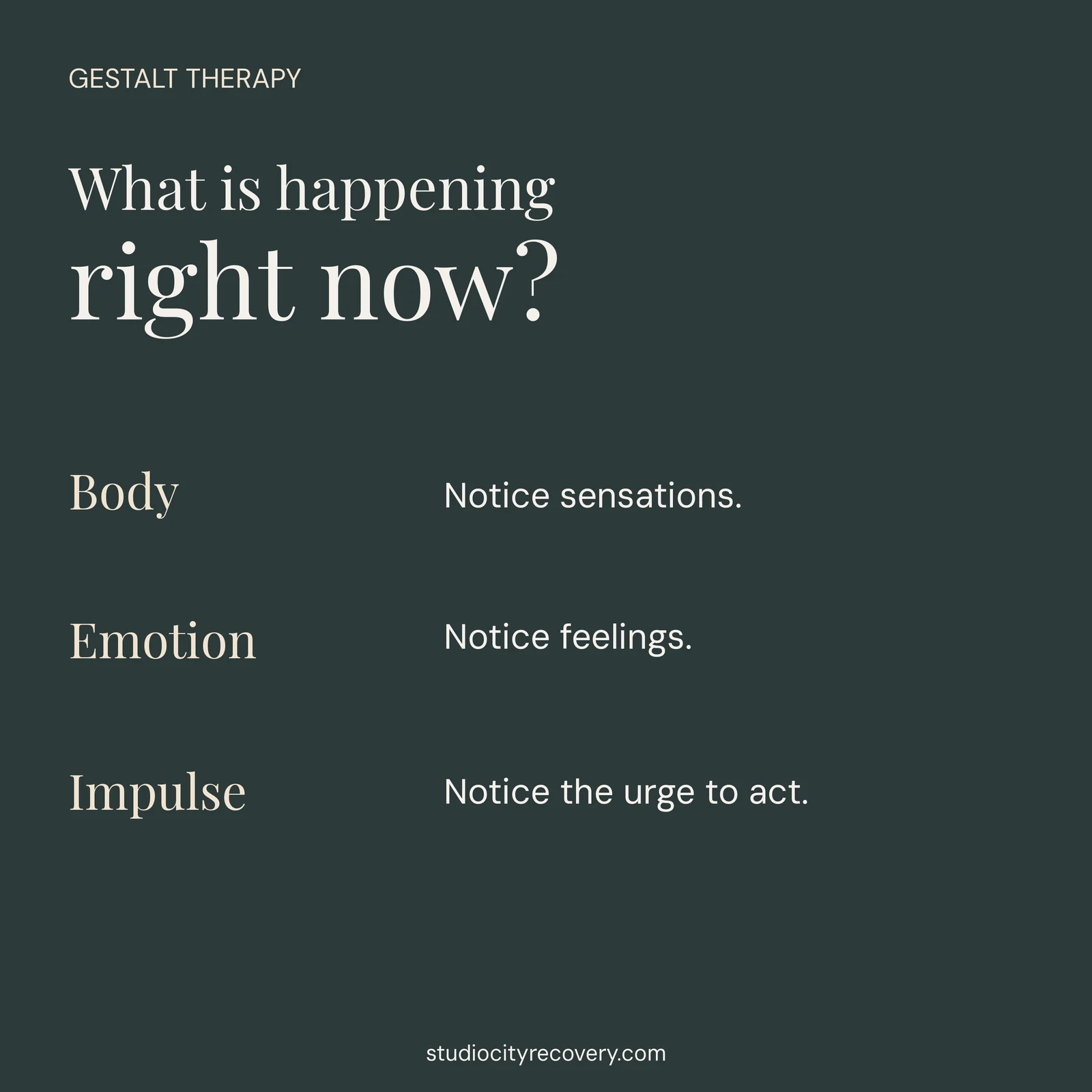
- Awareness, meaning clients learn to notice sensations, emotions, and impulses as they happen.
- Personal responsibility, meaning clients own their choices instead of attributing them to others.
- Unfinished business, meaning unresolved feelings from the past that keep shaping present behavior.
What Is Unfinished Business?
Unfinished business is an emotion or need from the past that was never expressed or resolved. Grief that was never felt, anger that was never spoken, or a relationship that ended without closure can all stay active underneath daily life. Many clients use substances to keep that unfinished business quiet.
What Techniques Does Gestalt Therapy Use?
Gestalt therapy uses active, experiential techniques rather than talk alone. 4 common examples:
- The empty chair, where a client speaks to an imagined person or a part of themselves.
- Body awareness exercises, which connect physical sensations to emotions.
- Exaggeration, where a client amplifies a gesture or phrase to discover what it expresses.
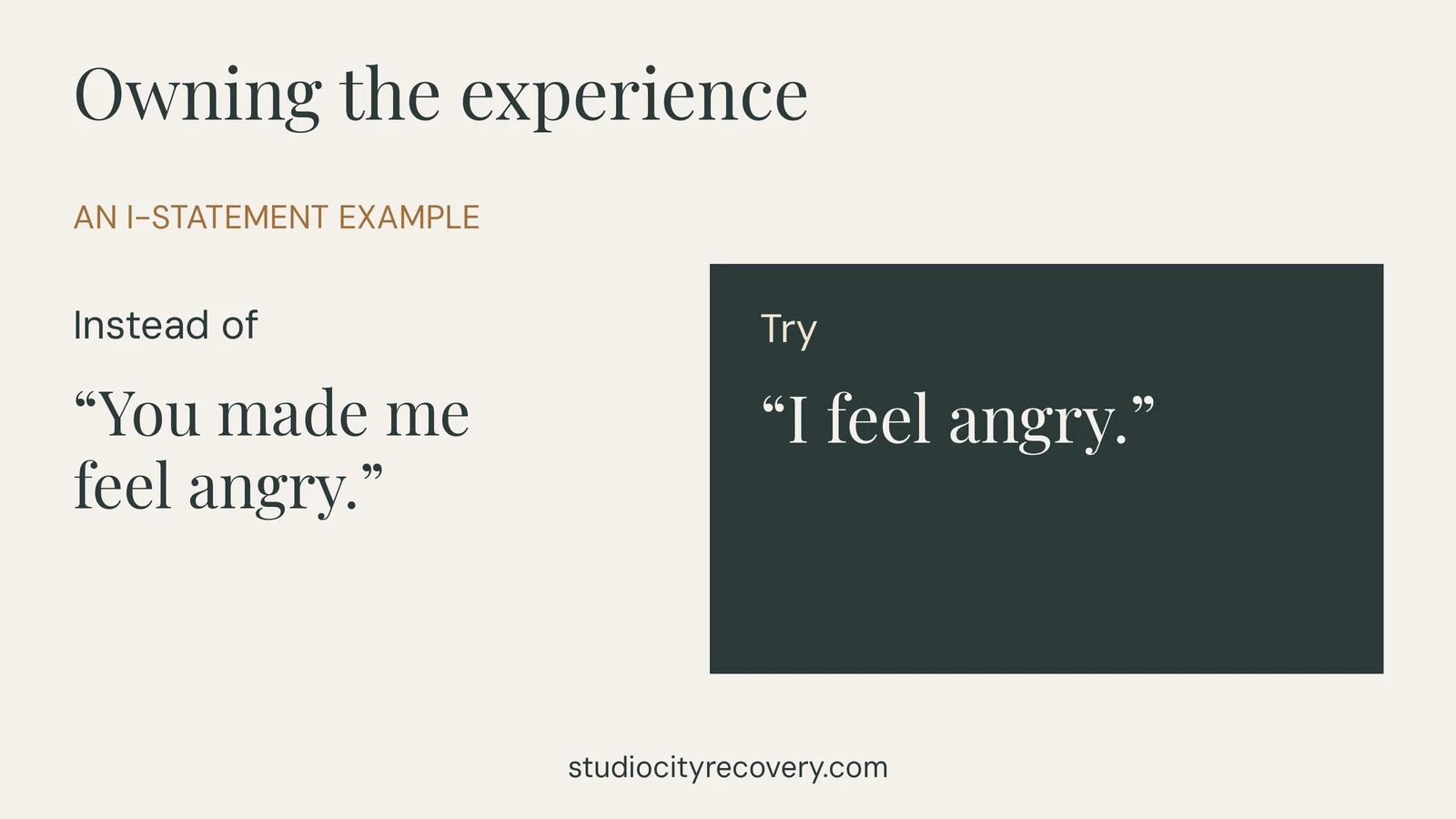
- “I” statements, which replace “you made me feel” with language that owns the experience.
What Happens in an Empty Chair Exercise?
In an empty chair exercise, a client imagines someone sitting across from them and speaks directly to that person. The person might be a parent, an ex-partner, or even the substance itself. Clients often say things they have never said aloud, which can release long-held emotion. The therapist then helps the client notice what shifted in their body and mood, so the insight carries over into daily life.
How Does Gestalt Therapy Help With Addiction?
Gestalt therapy helps with addiction by building awareness of the moment before use. 3 ways it supports recovery:
- It helps clients recognize the feeling or need underneath a craving.
- It reduces avoidance by making difficult emotions safe to experience in session.
- It strengthens personal responsibility for choices, which supports long-term change.
How Is Gestalt Therapy Different From CBT?
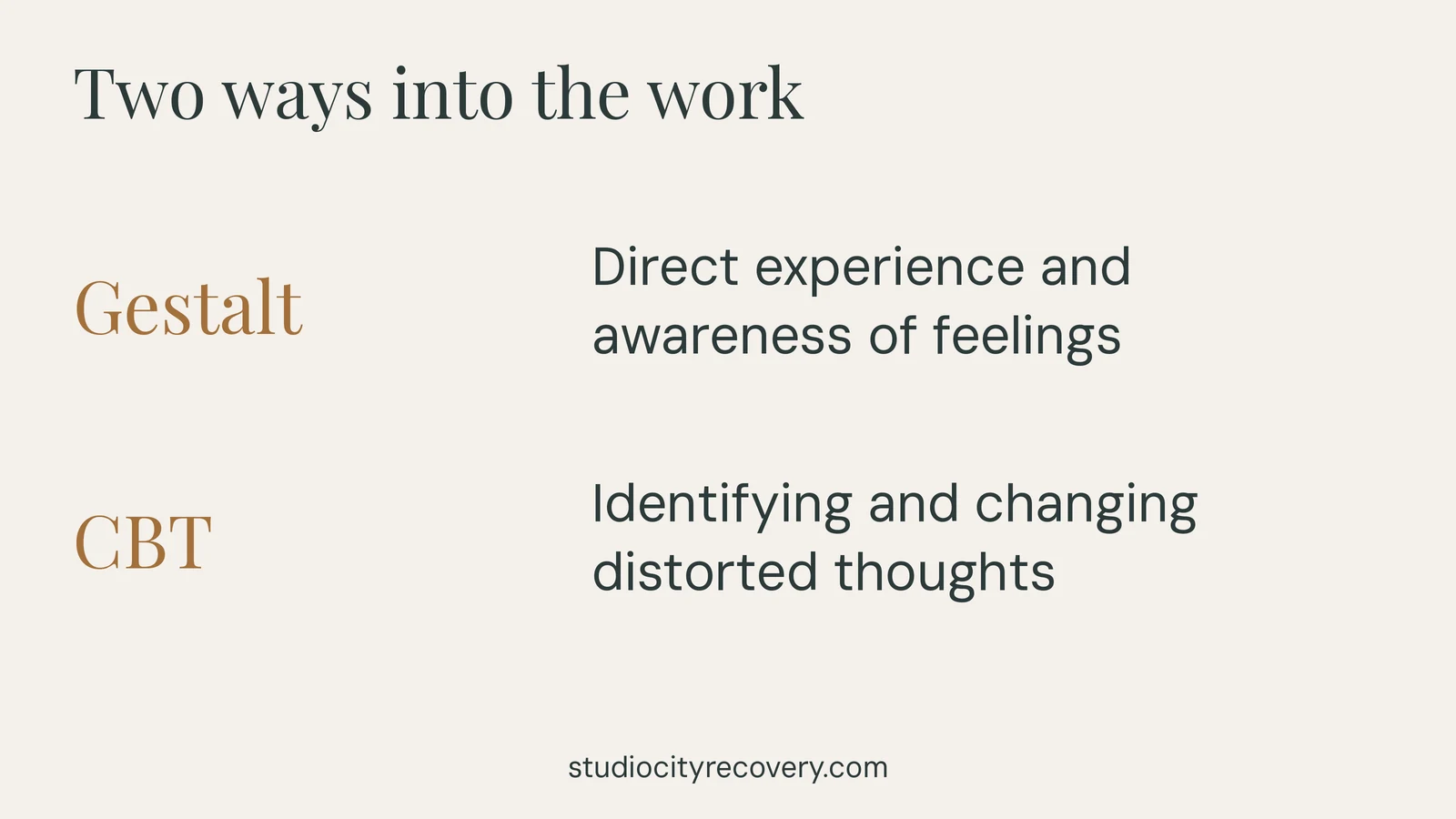
Gestalt therapy differs from CBT in focus and method. Cognitive Behavioral Therapy (CBT) works mainly by identifying and changing distorted thoughts. Gestalt therapy works mainly through direct experience and awareness of feelings in the room. Many treatment plans use both, since they target different layers of the same problem.
Is Gestalt Therapy Right for Everyone?
Gestalt therapy is not right for everyone at every stage. People in acute withdrawal or severe crisis usually need stabilization first. Clients with significant trauma may need regulation skills before doing intense emotional work, which is why pacing matters.
Which Related Therapies Use Similar Techniques?
Several related therapies share Gestalt’s experiential focus. Psychodrama therapy uses guided role play in a group setting. Internal Family Systems therapy works with different parts of the self, and art therapy in addiction recovery offers another nonverbal route to emotion.
How Does Gestalt Work Fit With Grief?
Gestalt work fits naturally with grief because unfinished business is so often about loss. Grief counseling therapy addresses that loss directly when it is driving substance use.
How Does Studio City Recovery Use Experiential Therapy?
Studio City Recovery combines experiential approaches with evidence-based clinical care. Individual therapy gives clients space for focused emotional work, and group therapy lets them practice awareness with peers. Both are part of our 28 and 30 day drug and alcohol rehab. Call (866) 995-8755.