.svg)


Cover image: AI-generated illustration; not an actual insurance card, medication product, or Studio City Recovery facility.
Most health plans cover addiction treatment, because federal law classifies substance use disorder care as an essential health benefit. What varies is how much, for how long, and at which level of care. Coverage rarely means full cost.
What Does Federal Law Require?
Two laws shape what plans must offer. Marketplace and most employer plans must include substance use treatment as an essential health benefit, and parity rules bar stricter limits on addiction care than on medical care. Four consequences follow.
- Plans cannot cap addiction treatment days more tightly than surgical days.
- Prior authorization rules must be comparable across medical and behavioral care.
- Denials must state a clinical reason.
- Appeals rights apply as they do for any medical claim.
What Determines How Much Is Covered?
Five variables set the actual number.
- Level of care, since detox, residential, PHP, and outpatient are authorized separately.
- Network status of the facility.
- Your deductible and how much of it remains this plan year.
- Coinsurance percentage after the deductible is met.
- Documented medical necessity, reviewed at intake and again during the stay.
Why Does Authorization Get Reviewed Mid-Stay?
Insurers authorize treatment in blocks rather than for a full stay. The facility submits clinical updates and the insurer approves more days, which is why a 30-day stay is rarely approved on day one.
What Are the 5 Questions to Ask?
Call the number on your card and ask these before admission.
- What levels of substance use treatment does my plan cover?
- Is this facility in network, and what changes if it is not?
- What is my remaining deductible and my coinsurance rate?
- Is prior authorization required, and who submits it?
- How many days are typically authorized at a time?
Why the Reference Number Matters
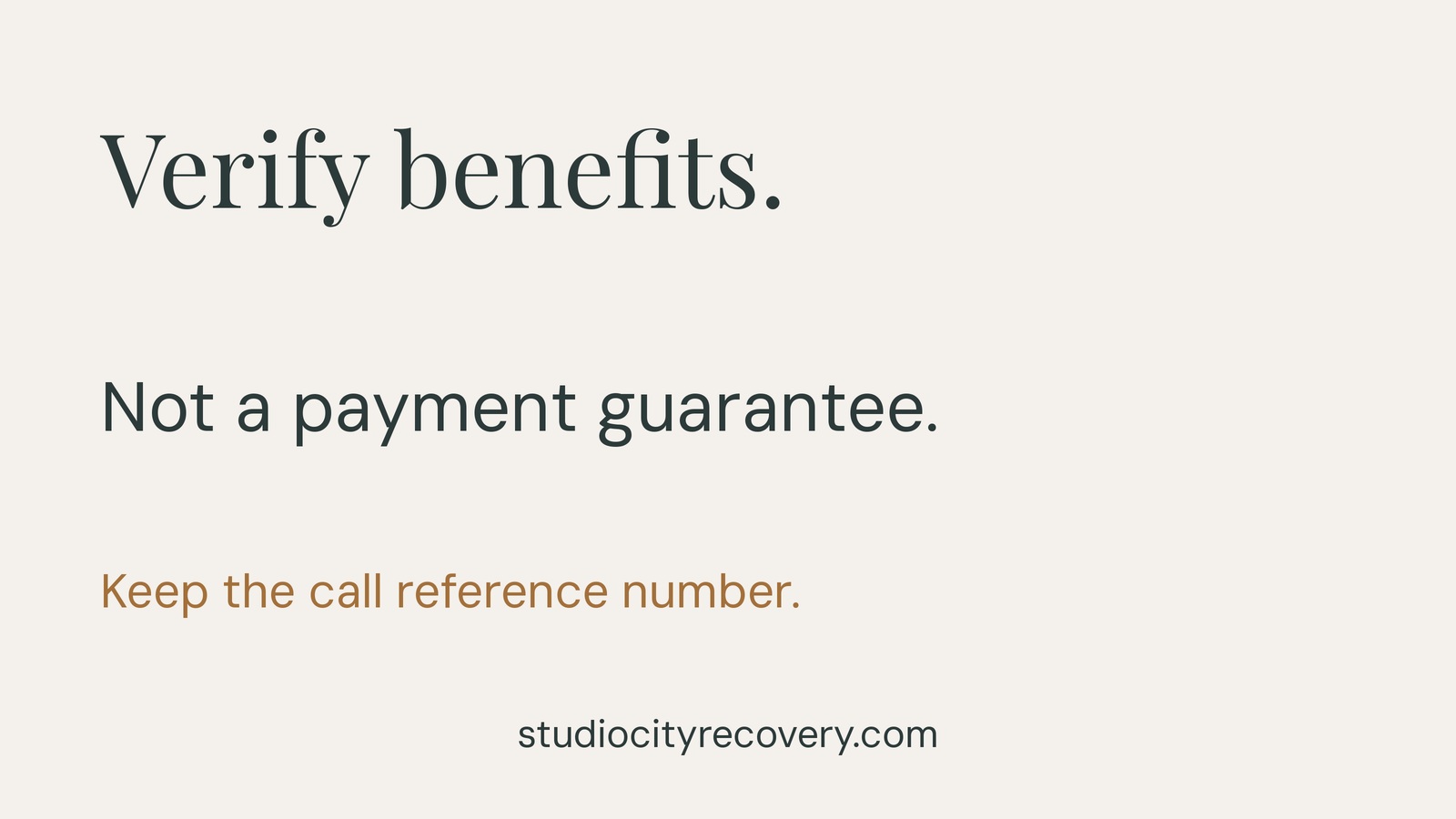
Verification quotes are not guarantees. The reference number from that call is what you cite if a claim is later disputed, and without it the conversation did not happen as far as the insurer is concerned.
What Usually Is Not Covered?
Four categories commonly fall outside a plan.
- Private rooms and premium accommodations.
- Amenities and experiential activities not billed as clinical services.
- Out-of-network balance billing above the plan’s allowed amount.
- Treatment continued after the insurer stops authorizing days.
What Fills the Gap
Private pay, financing, and payment plans cover what insurance does not. Cost structures and payment routes are covered in how much rehab costs and how people pay for it.
How Does Network Status Change the Math?
In-network facilities have a negotiated rate and your plan pays its share. Out-of-network facilities do not, so three things change.
- Your coinsurance percentage is usually higher.
- A separate out-of-network deductible may apply.
- You can be billed for the difference between the facility’s rate and the plan’s allowed amount.
Ask whether the facility accepts the allowed amount as payment in full, which removes the third risk.
What About Medicare and Medicaid?
Both cover addiction treatment, with narrower networks and stricter authorization than commercial plans. Medicare duration rules are covered in how long a person can stay in rehab on Medicare, and Medicaid specifics appear in does Medicaid cover fentanyl rehab.
How Do You Start the Process?
Admissions teams verify benefits directly and usually return an answer within one business day. Bringing your card and policy number to that call removes the back and forth.
Where to Start
Verification and admission can be arranged through book your stay, and bringing your policy number to that first call removes a round trip.
Frequently Asked Questions
Can you go to rehab without insurance?
Yes. Private pay, financing, payment plans, and sliding scale options all exist, and many facilities will structure a plan. Ask about total cost in writing before committing.
What happens if insurance stops authorizing days?
You can appeal, step down a level of care, or continue as private pay. Facilities generally file the appeal, and appeals succeed often enough to be worth it.
Does using insurance create a permanent record?
Treatment claims carry federal confidentiality protections stronger than standard medical privacy rules. Employers do not receive clinical details.
Is out-of-network treatment ever worth it?
Sometimes. Coverage at a lower percentage can still beat waiting weeks for an in-network bed when the need is urgent.