.svg)


Cover image: Illustrative stock photograph; not actual Studio City Recovery people or facilities.
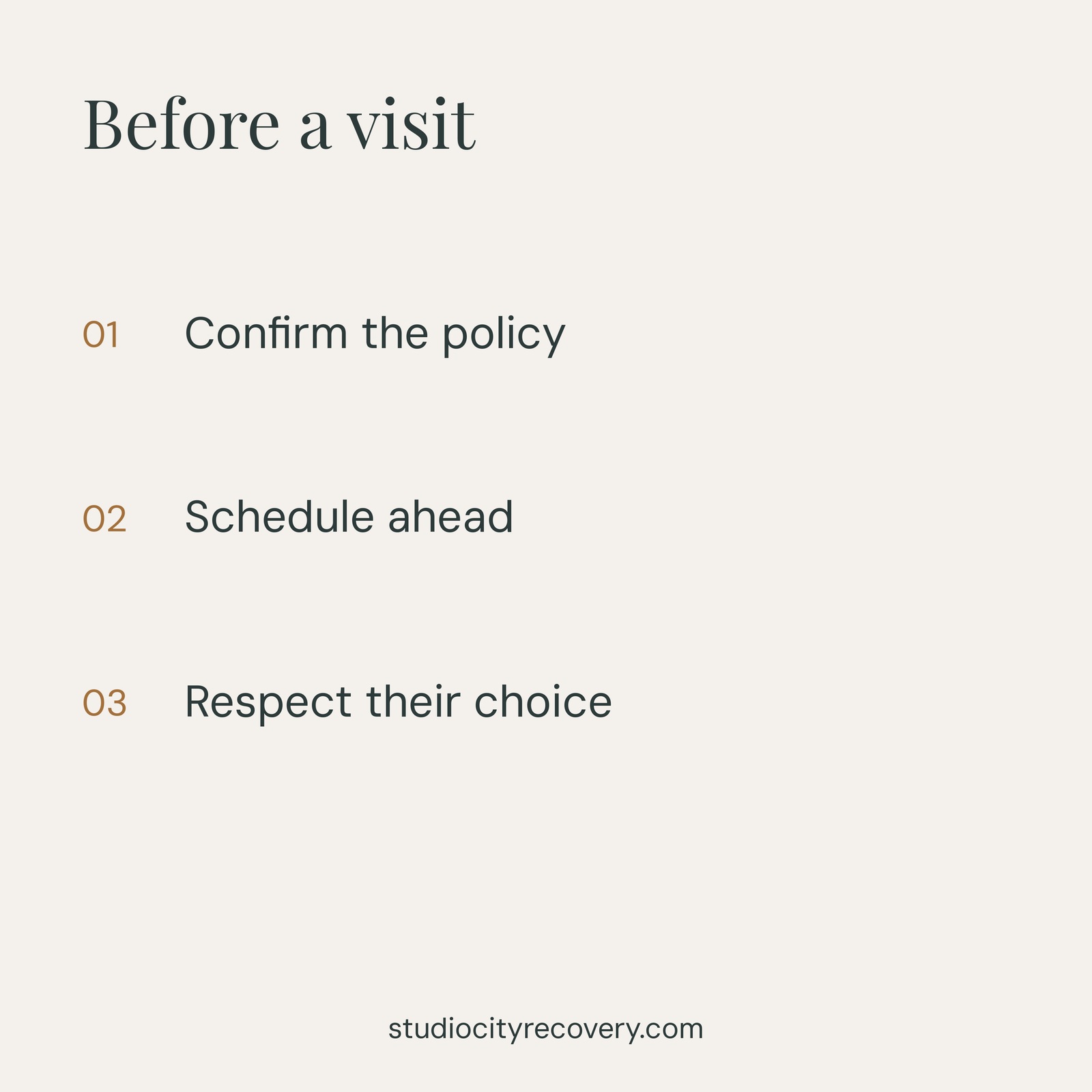
Most residential programs allow visits after an initial adjustment period of 7 to 14 days, usually on scheduled weekend hours. Rules vary by facility. The early restriction is clinical rather than punitive, and understanding why makes the wait easier.
Why Is There a Blackout Period?
The first 2 weeks cover detox, stabilization, and the start of therapeutic work. Three reasons drive the restriction.
- Withdrawal and early stabilization demand full clinical attention.
- Outside contact can reintroduce the stressors that fueled the use.
- Group cohesion forms in the first weeks and visitors interrupt it.
What Are the Typical Visitation Rules?
Programs differ, but 5 rules appear almost everywhere.
- Visits are scheduled in advance rather than dropped in.
- The patient must approve you on an authorized visitor list.
- Visits happen in designated common areas, not private rooms.
- Bags and gifts are searched on arrival.
- Staff may end a visit that becomes disruptive.
What Can You Bring?
Bring approved items only, since most programs prohibit outside food, medications, aerosols, and anything containing alcohol. The full list of restricted items is in things you should and shouldn’t bring to rehab.
How Is a Family Session Different From a Visit?
A family session is clinical work with a therapist present, while a visit is social time. Four differences separate them.
- Purpose: sessions address patterns, visits offer connection.
- Facilitation: a clinician leads the session and sets the agenda.
- Scheduling: sessions are part of the treatment plan, not weekend hours.
- Outcome: sessions produce concrete changes for the household.
Family sessions do more for long-term outcomes than visits do. Our family therapy program explains how they are structured.
What Should You Avoid Saying?
Avoid updates that add pressure, including business problems, financial stress, and conflict at home. Four topics are worth holding until discharge planning.
- Work crises that the patient cannot act on.
- Money problems created by the absence.
- Family conflict about the decision to enter treatment.
- Timelines and pressure to come home early.
What Should You Expect on the Day?
First visits are often shorter and more awkward than families anticipate, and that is normal. Four things to plan for.
- Expect 1 to 2 hours rather than an open-ended afternoon.
- Expect the person to look tired, since early treatment is demanding.
- Expect emotion on both sides, including anger that is not really about you.
- Expect staff nearby, which is standard rather than a sign of trouble.
How Should You Open the Conversation?
Lead with presence rather than questions. Saying that you are glad to see them lands better than asking how treatment is going, which puts them in the position of reporting on themselves.
How Do You Support Someone Between Visits?
Letters, approved phone calls, and consistency matter more than frequency. Practical guidance appears in 10 tips for supporting someone in recovery.
Changing Household Patterns
Families often need to change their own patterns alongside the patient, which is covered in how to stop enabling a family member’s addiction.
How Do Visits Change Near Discharge?
Visitation loosens as discharge approaches, because the clinical goal shifts from separation to reintegration. Four changes are common in the final weeks.
- Longer visits and more frequent scheduling.
- Supervised outings off campus.
- Overnight passes in some programs.
- Family sessions focused on the return home.
These changes are part of discharge planning rather than a reward, and the aftercare plan is built alongside them.
Frequently Asked Questions
Can children visit a parent in rehab?
Many programs allow it with advance approval and supervision, often in a separate family area. Age minimums vary, and some facilities schedule dedicated family days for this reason.
How often can you visit?
Weekly visits during scheduled hours are the common standard in residential programs. Frequency can increase during the discharge planning phase as the patient prepares to return home.
Can you call or text instead?
Most programs permit scheduled calls after the initial period, with device access limited. Policies differ, and the program will explain the schedule at admission.
What happens if the patient declines visits?
That is the patient’s decision and programs honor it. Declining early contact is common and usually reflects focus on treatment rather than anything about the relationship.