
Featured image: AI-generated editorial illustration. A balanced meal is one practical response to hunger in a HALT check.
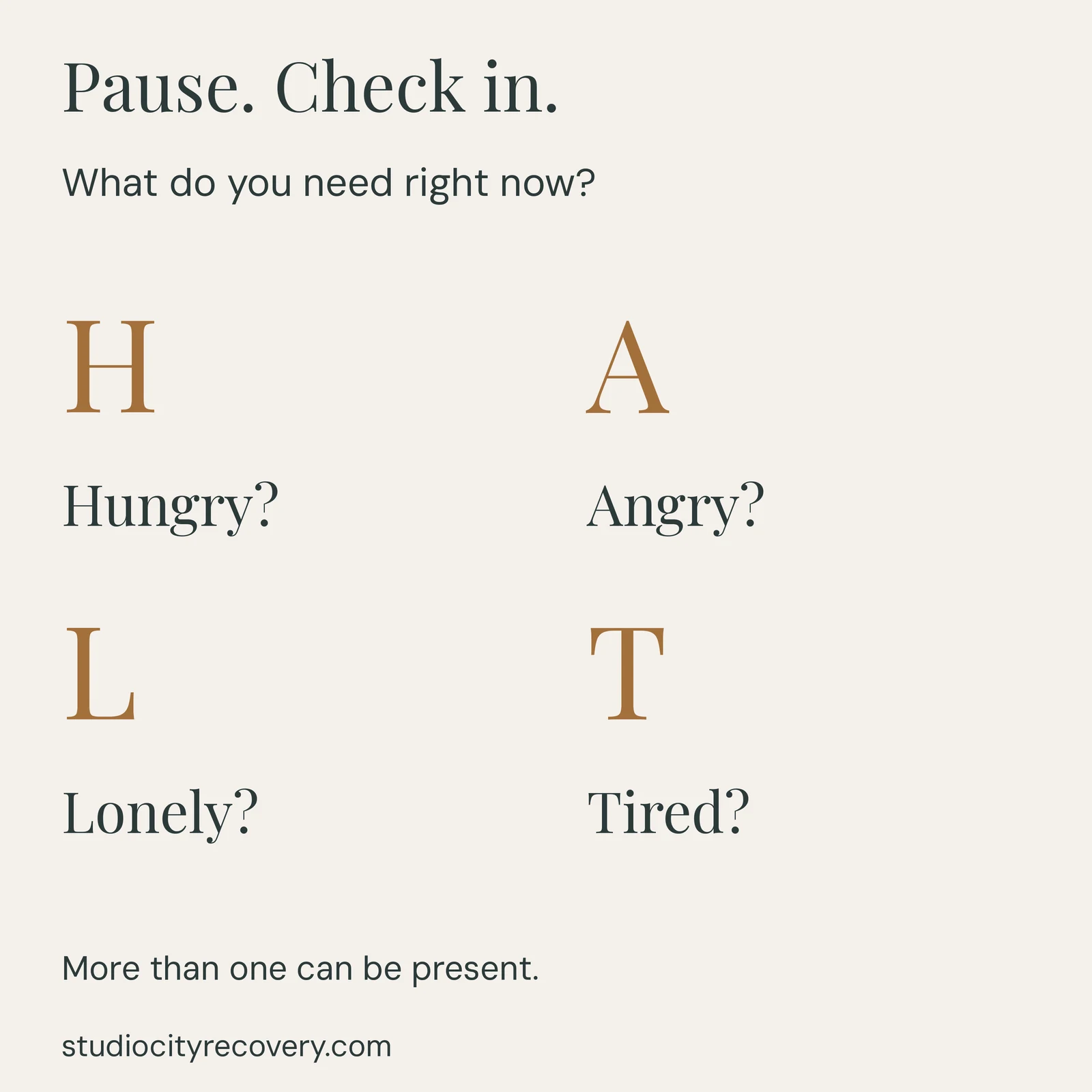
HALT stands for Hungry, Angry, Lonely, and Tired, 4 physical and emotional states that make people in recovery more vulnerable to cravings and relapse. The acronym is a quick self-check. When a craving appears, asking “Am I hungry, angry, lonely, or tired?” often reveals a basic need that can be met without using.
What Does Each Letter in HALT Stand For?
Each letter in HALT points to a different kind of vulnerability:
- Hungry, meaning low blood sugar or poor nutrition that increases irritability.
- Angry, meaning unresolved frustration or resentment.
- Lonely, meaning isolation or a lack of meaningful connection.
- Tired, meaning sleep deprivation or physical and mental exhaustion.
Why Is Hunger on the List?
Hunger is on the list because low blood sugar affects mood and impulse control. Many people in early recovery also confuse hunger with craving, since both create a physical sense that something is missing. How does nutrition support addiction recovery explains why regular meals matter.
Why Is Tiredness on the List?
Tiredness is on the list because sleep loss weakens the brain’s ability to manage stress and resist impulses. How sleep problems and addiction are connected covers the clinical link in detail.
Why Are Anger and Loneliness on the List?
Anger and loneliness are on the list because they are 2 of the most common emotional triggers for use. Anger left unexpressed tends to turn into resentment, and resentment often becomes a justification to drink or use. Loneliness removes the people who might notice warning signs and step in before a relapse.
Why Does HALT Work as a Relapse Prevention Tool?
HALT works because it interrupts automatic thinking. A craving often feels like an emergency that demands a substance. HALT slows the moment down and redirects attention to a need that has a simple, safe solution.
Can More Than One HALT State Happen at Once?
More than one HALT state often happens at once, and combinations raise the risk. Someone who skipped lunch, slept 5 hours, and had a tense day at work is hungry, tired, and angry together. Addressing even one of those states can lower the intensity of a craving.
How Do You Use HALT in Daily Life?
You use HALT by checking in with yourself at set times and whenever a craving appears. 5 practical steps:
- Pause the moment you notice a craving or strong emotion.
- Ask each HALT question honestly, one at a time.
- Identify which state, or combination of states, is present.
- Take one specific action to address it.
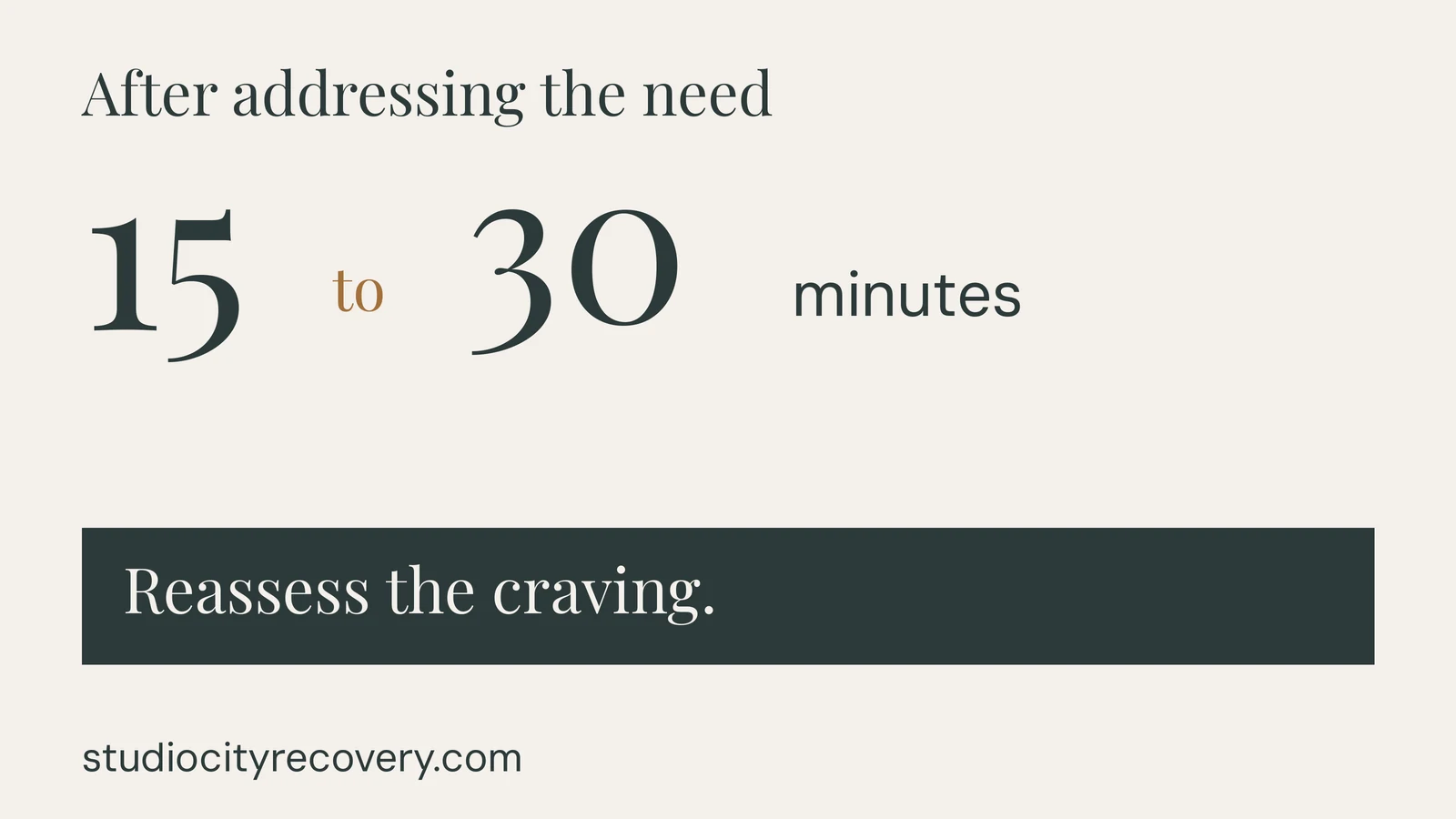
- Reassess the craving after 15 to 30 minutes.
What Actions Match Each HALT State?
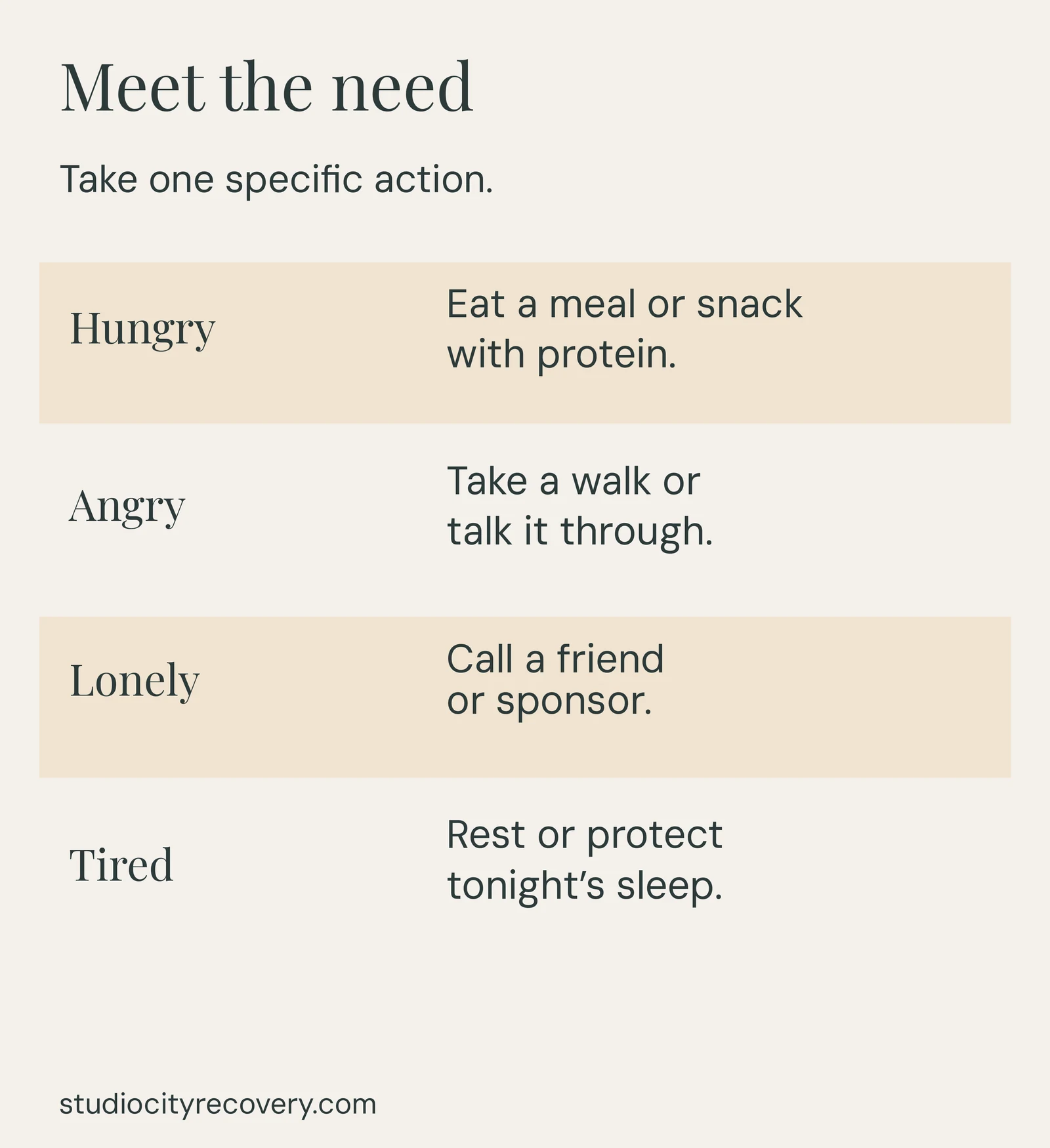
Each HALT state has simple, immediate responses:
- Hungry: eat a balanced snack or meal with protein.
- Angry: take a walk, write it down, or talk it through with someone.
- Lonely: call a friend, sponsor, or attend a meeting.
- Tired: rest, nap, or protect tonight’s sleep schedule.
When Should You Do a HALT Check?
A HALT check works best at 3 predictable points: mid-afternoon, early evening, and any time a craving shows up. Mid-afternoon and early evening are common danger zones because hunger, fatigue, and stress tend to build at the same time.
How Is This Different From Our Aftercare Planning Guide?
Our guide on what an aftercare plan should include after leaving rehab introduces HALT as one part of a larger plan. This article is the practical, day-to-day version of that check.
What Other Tools Work Alongside HALT?
HALT works best alongside other relapse prevention skills. What are common triggers for relapse helps identify personal risk patterns, and DBT distress tolerance for getting through cravings safely adds skills for intense moments. Dialectical Behavioral Therapy (DBT) teaches those skills in a structured way.
Is HALT Enough on Its Own?
HALT is not enough on its own for most people. It is a quick first check, not a full treatment plan. Ongoing therapy, support groups, and a written relapse prevention plan provide the structure HALT depends on.
How Does Studio City Recovery Teach Relapse Prevention Skills?
Studio City Recovery teaches practical relapse prevention skills throughout treatment. Our 28 and 30 day drug and alcohol rehab combines individual therapy and group therapy with daily structure. Call (866) 995-8755.