.svg)


Avoid relapse after rehab by rehearsing your response to a craving before you have one. Aftercare is the scaffolding, and what an aftercare plan should include covers how to build it. This guide covers what happens in the 20 minutes a craving actually lasts, which is where prevention plans succeed or fail.
What Is the 4-Step Craving Protocol?
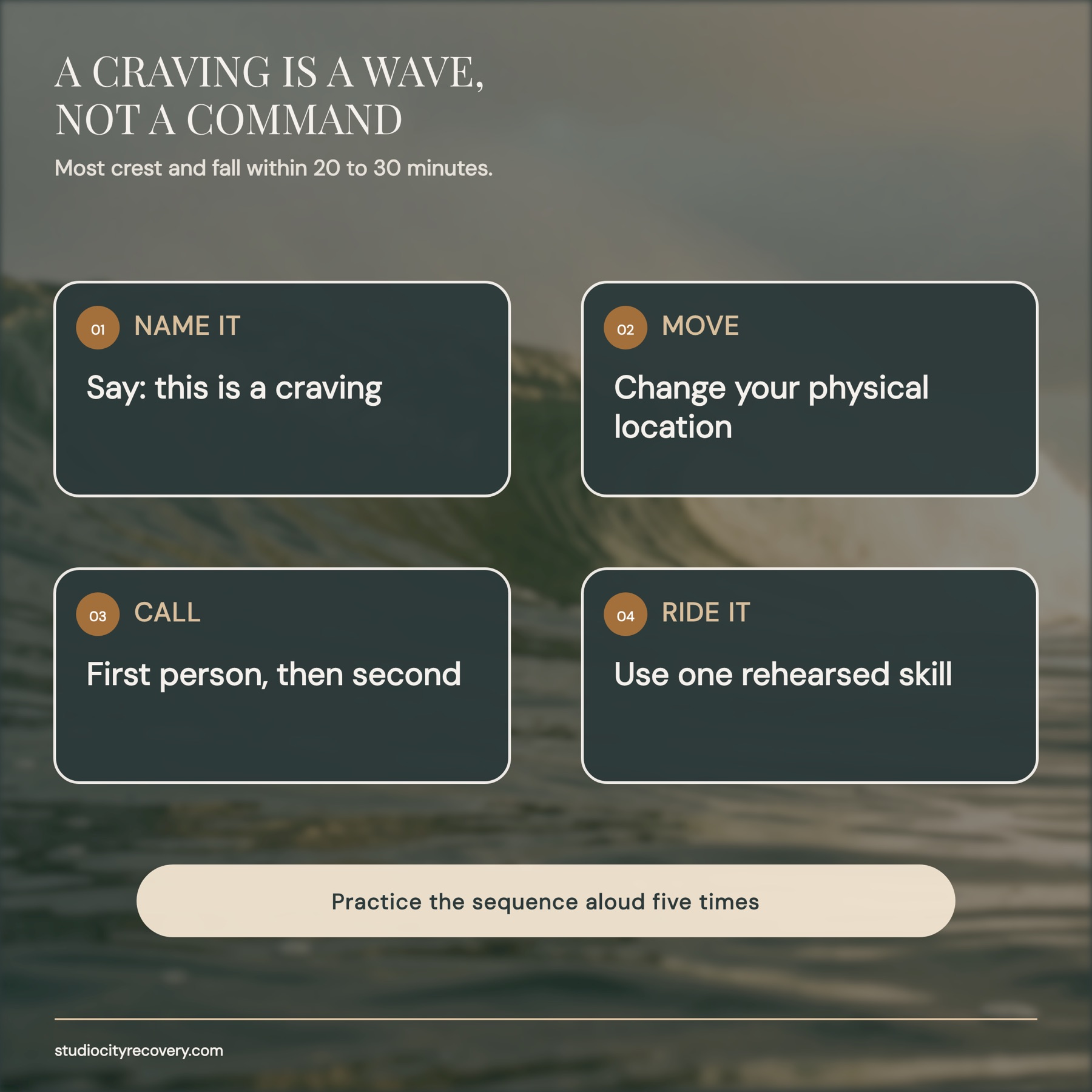
Clients leave with a rehearsed 4-step response, written on a card they carry:
Name it out loud: this is a craving, and it peaks and falls within 20 to 30 minutes
Change your physical location immediately, before deciding anything else
Call the first name on your list, and the second if the first does not answer
Run 1 distress tolerance skill until the wave passes
Rehearsal is the active ingredient. A protocol read once at discharge does not fire under pressure, while one practiced aloud 5 times becomes automatic.
Why Is Structure the First Line of Defense?
Structure defends against relapse because unstructured time is where cravings, boredom, and old habits recombine. Clients who schedule their first 90 days hour by hour report fewer white-knuckle evenings, and hobbies play a documented role in recovery precisely because they fill the hours drinking used to own. A sober home environment removes the ambient cues that structure alone cannot.
How Does Aftercare Multiply Your Odds?
Aftercare multiplies your odds because accountability and skill reinforcement continue exactly when motivation naturally dips. Our aftercare program and step-down inpatient vs outpatient rehab keep clinical contact alive through the first year, and what a strong aftercare plan includes is worth reading before discharge day, not after.
What Is the Emergency Protocol for a Bad Night?
The emergency protocol is 4 steps executed in order: leave the situation, call person 1 on your roster, use a rehearsed DBT TIPP skill for intense emotions, and if the urge persists, contact your treatment team the same night. Cravings crest and fall within 20 to 30 minutes; the protocol exists to carry you across that crest.
How Do You Rebuild the Plan After Life Changes?
Rebuild the prevention plan after any major life change: a new job, a move, a relationship start or end, or a loss. Each change rewrites your trigger map and your daily structure simultaneously, which is precisely when old patterns probe for openings.
A 30-minute quarterly review keeps the plan current. Clients who treat the plan as a living document, updated with their therapist or sponsor, carry protection that matches their actual life instead of the life they had at discharge.
What Does a Strong First 90 Days Look Like?
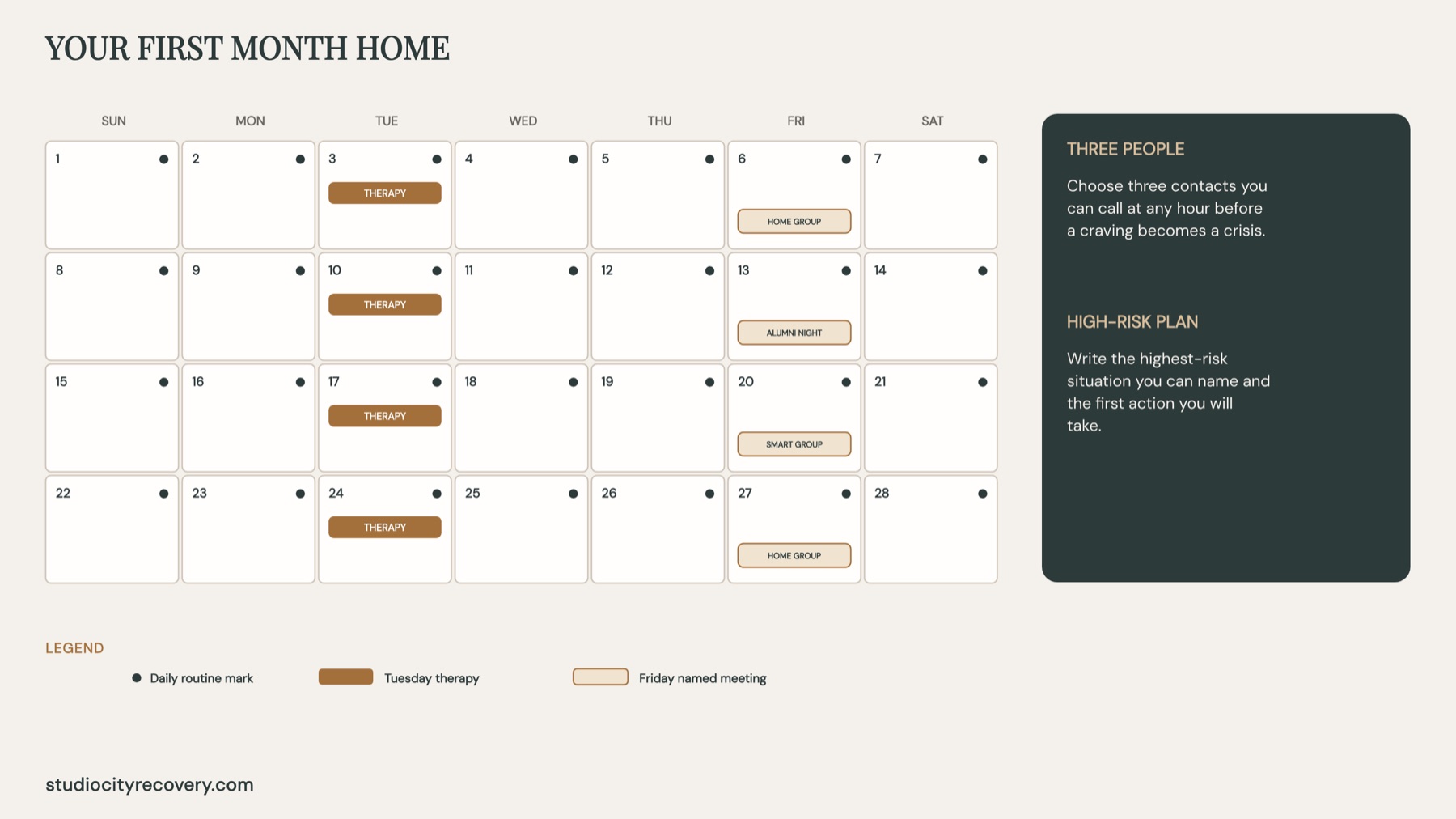
A strong first 90 days has 5 components in place before discharge:
Weekly therapy scheduled and confirmed
A support group meeting cadence with specific days and locations
3 people who can be called at any hour
A daily routine covering wake time, meals, movement, and sleep
A written plan for the highest-risk situation you can name
Plans built before discharge get followed. Plans intended to be figured out later usually are not.
How Does Aftercare Change the Odds?
Clients who complete structured treatment programs sustain recovery at substantially higher rates than those who end treatment at discharge. The support does not need to be intense to work, but it does need to be continuous.
How Long Should Someone Stay in Aftercare?
Plan for at least 12 months of some structured support, tapering intensity rather than stopping outright. The first year carries the highest risk, and support that continues past the point it feels necessary is the version that works. Clients who stay connected through month 12 describe the second year as noticeably easier.
Related Prevention Questions From Discharge Week
Should Family Be Part of the Plan?
Yes, informed families spot early warning signs first, and family therapy during treatment teaches them what to watch for and how to respond.
What if a Slip Happens Anyway?
Act within 48 hours and treat it as data, the approach covered in our guide to coping skills for addiction recovery.
BLOG 04 OF 10