.svg)


Yes, you can leave rehab early, because voluntary treatment means adults retain the legal right to discharge themselves at any time. What matters is what happens next: the urge to leave peaks predictably in week 1 and again around week 3, and how a program responds to that urge often determines the outcome.
When Do Clients Most Want to Leave, and Why?
The urge to leave clusters at 2 predictable points:
Days 3 to 7: withdrawal discomfort, sleep disruption, and the shock of unfamiliar routine
Weeks 2 to 3: physical stabilization creates the false confidence of feeling cured
Anytime: a family crisis, work pressure, or a difficult therapy session surfaces the exit thought
The week-3 version is the more dangerous one. Feeling better is the treatment working, not the treatment finished, and leaving at that point returns a stabilized person to an unchanged environment with untested skills.

What Actually Happens if You Insist on Leaving?
If a client insists on leaving, staff conduct a discharge conversation, document the decision as against medical advice, and build the safest possible exit: medication guidance, a same-week inpatient vs outpatient rehab referral, and crisis contacts. Nobody is restrained or locked in. The door works; the goal is making sure walking through it is an informed decision rather than an impulsive one.
What Are the Real Risks of Leaving Against Medical Advice?
Leaving early carries 3 documented risks: relapse within days for a majority of AMA discharges, dangerous overdose risk from reduced tolerance, and interrupted treatment of co-occurring conditions. The completion math is stark, and it is a core reason long-term programs show higher success rates than truncated stays.
What Should You Do With the Urge Instead of Acting on It?
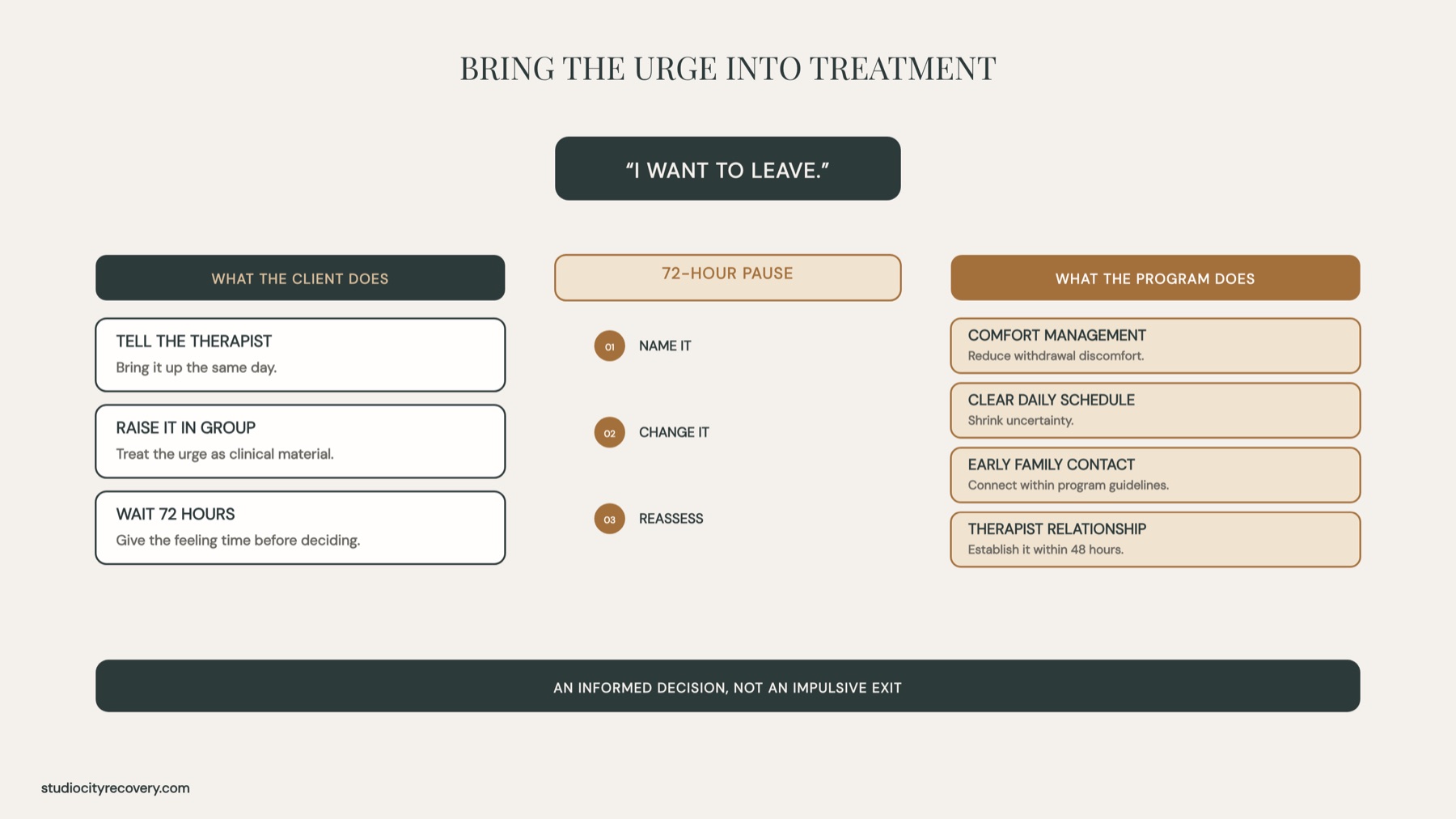
Bring the urge into treatment: tell your therapist the same day, raise it in group therapy, and give the feeling 72 hours before deciding. The urge to leave is itself clinical material, usually pointing at the exact discomfort individual therapy exists to work through. Programs like our 28-30 day rehab are built around riding out these waves, and what a typical day in rehab looks like gets easier once the first week passes.
How Do Programs Reduce the Urge to Leave in the First Place?
Programs reduce the urge by attacking its causes: aggressive comfort management during detox, a clear daily schedule that shrinks uncertainty, early family contact within program guidelines, and a therapist relationship established in the first 48 hours. When the first week is survivable, week-3 confidence becomes a conversation instead of a packed bag.
Environment does real work here too. Comfortable private settings remove the institutional feel that drives a share of early exits on its own.
What Questions Should Families Ask Before Agreeing to an Early Exit?
Four questions reframe the conversation productively:
What specifically feels unbearable today, and is it a problem the program can solve
What was the plan when you arrived, and what changed
Can you commit to 48 more hours before deciding
What happens on day 3 at home, realistically
The 48-hour ask succeeds more often than any argument. Urgency to leave fades reliably once the acute moment passes.

What Are the Risks of Leaving Against Medical Advice?
Leaving during or shortly after detox carries the highest relapse and overdose risk of any point in treatment, because tolerance has dropped while triggers remain untouched. Programs will document the risks and keep the door open for return.
Can Someone Return to Treatment After Leaving Early?
Yes. Returning after an early exit is common and programs treat it as a continuation rather than a failure. The sooner the return, the less ground is lost, and admission is usually faster the second time because the clinical history already exists.
Related Questions From Clients and Families
Can a Family Member Force Someone to Stay?
No, adults in voluntary treatment cannot be held, a legal reality explained in can you force someone into rehab.
Does Leaving Early Affect Work Protections?
It can complicate leave arrangements, and whether you can get fired for going to rehab covers the FMLA details worth knowing first.
BLOG 03 OF 10