.svg)

Cover image: AI-generated illustration; not an actual insurance card, medication product, or Studio City Recovery facility.
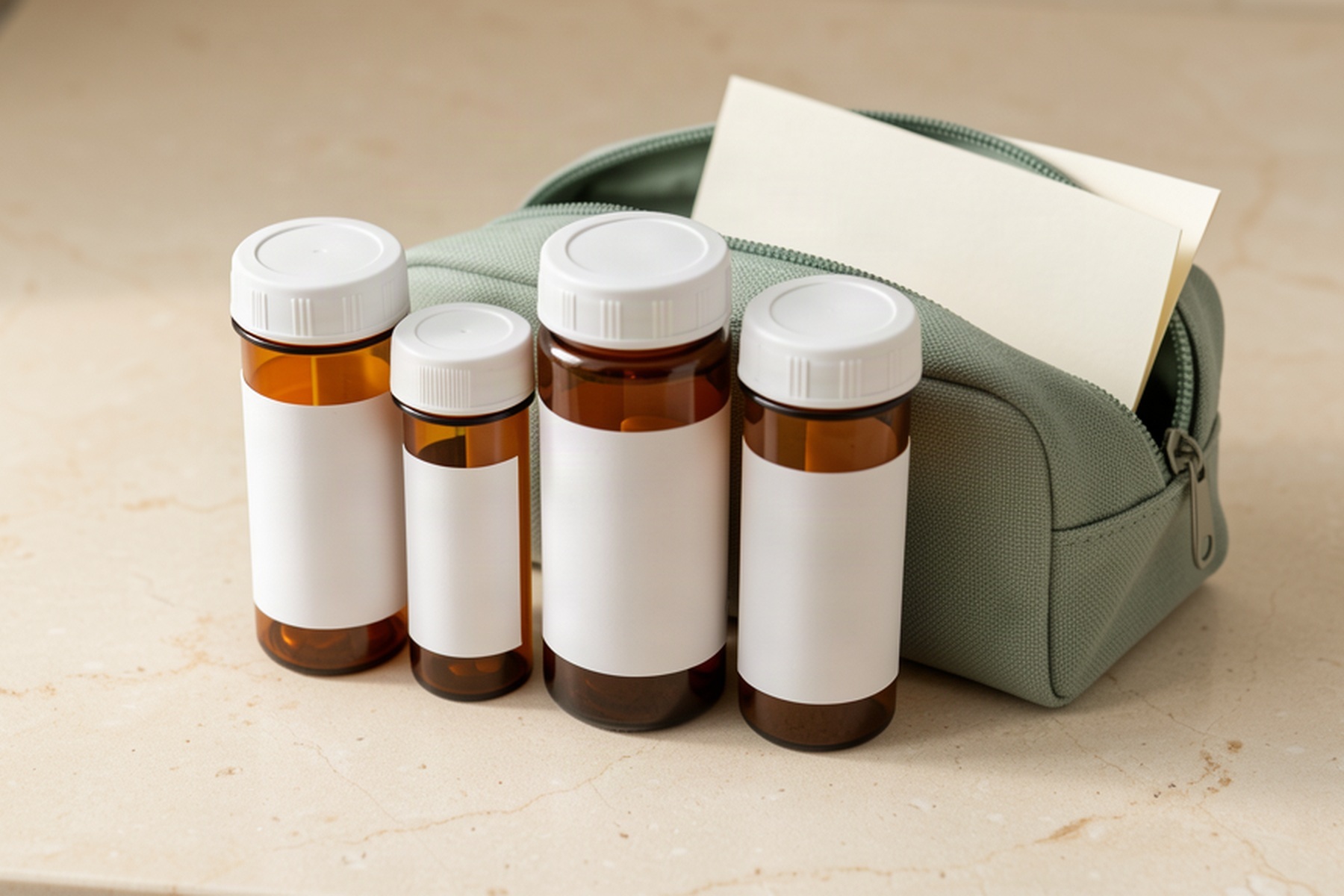
Yes, and you should. Bring every prescription in its original labeled pharmacy bottle, along with a written list of doses and prescribers. Medical staff review each one at intake and decide what continues, what changes, and what is held.
What Should You Bring?
Four items make the medical intake fast and accurate.
- All current prescriptions in original labeled bottles.
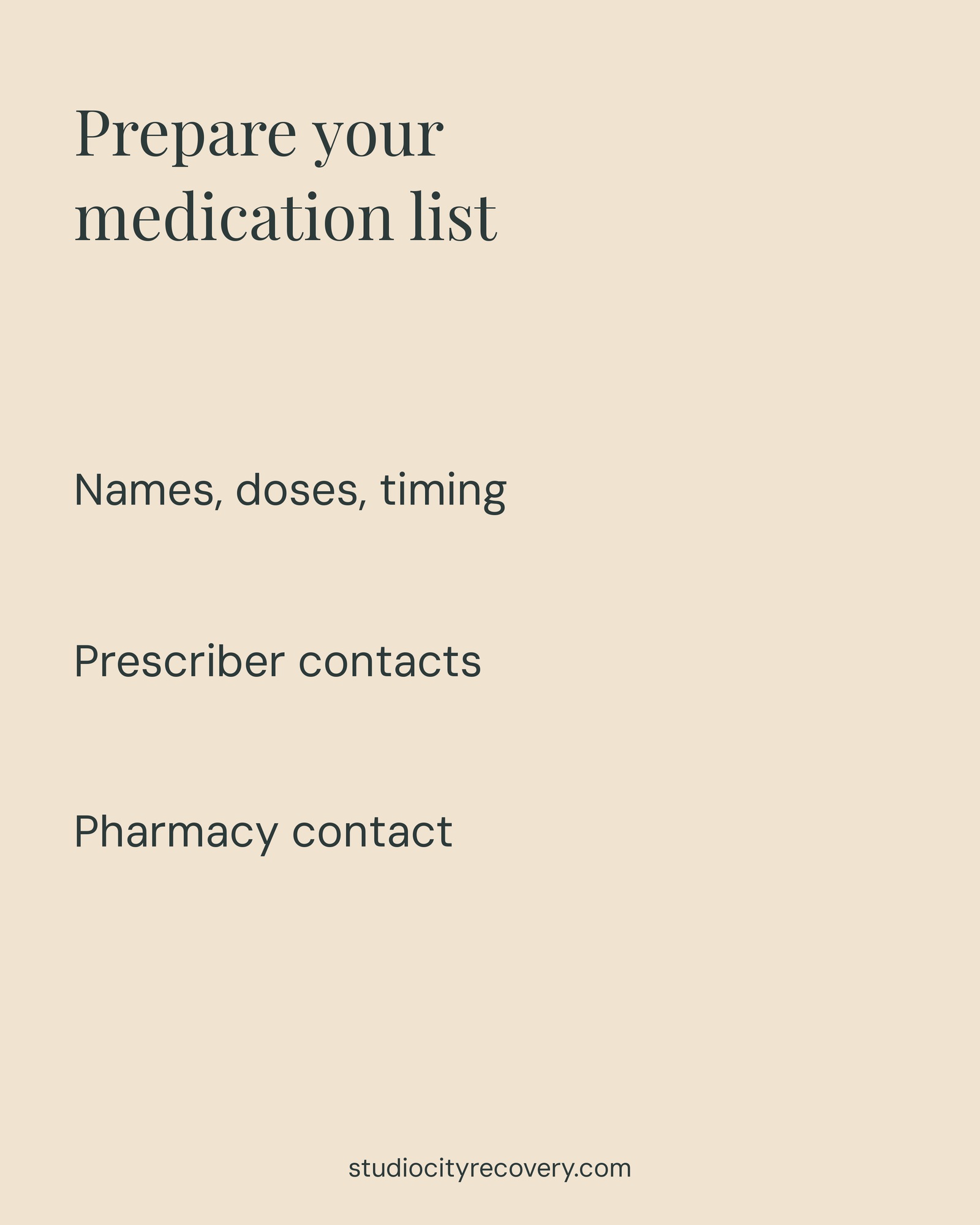
- A written list with drug names, doses, and timing.
- Contact details for your prescribing physicians.
- Your pharmacy name and phone number.
Why Original Bottles Matter
Loose pills in a weekly organizer usually cannot be verified, since staff cannot confirm what they are. Most programs refuse them, which means a gap in your regimen while refills are arranged.
What Happens at the Medical Intake?
A nurse or physician reviews the full list against your history. Three decisions come out of that review.
- Continue as prescribed, which applies to most maintenance medications.
- Adjust, when a dose interacts with detox protocols.
- Hold, when a medication carries misuse risk in a treatment setting.
Who Actually Holds the Medication?
Nursing staff store and administer everything, including over-the-counter items. Self-administration is not permitted in residential settings, which is a safety rule rather than a statement about any individual patient.
How Are Psychiatric Medications Handled?
Antidepressants, mood stabilizers, and antipsychotics are almost always continued, because stopping them abruptly destabilizes the patient at the worst possible time. The psychiatrist reviews them and coordinates with your outside prescriber where possible.
Why They Are Continued
Co-occurring conditions are treated alongside the substance use rather than after it, which is covered in what is dual diagnosis treatment.
What About Controlled Substances?
Benzodiazepines, stimulants, and opioid pain medication get the closest review. Four outcomes are possible.
- Tapered under medical supervision during the stay.
- Continued at a reduced dose with monitoring.
- Replaced with a non-controlled alternative.
- Continued as prescribed when the clinical need is clear.
Prescribed medications used in addiction treatment itself, such as buprenorphine or naltrexone, follow a different pathway. That is covered in what is medication-assisted treatment.
How Long Does the Review Take?
Medical intake usually runs 30 to 60 minutes, and the medication review is part of it. Three things speed it up.
- A typed list rather than bottles alone.
- Prescriber contact details, so staff can verify without you.
- Advance notice of any controlled substance, given at the assessment rather than at the door.
Patients who send their medication list ahead of admission often have decisions made before they arrive.
What Is Not Allowed?
Five categories are typically refused at intake.
- Medications belonging to someone else.
- Unlabeled or expired bottles.
- Anything containing alcohol, including some cough syrups and mouthwash.
- Supplements not reviewed by medical staff.
- Cannabis products, including CBD, in most programs.
The broader packing list is covered in things you should and shouldn’t bring to rehab, and pre-admission steps appear in how to prepare for rehab.
Who Coordinates With Your Outside Prescriber?
The facility’s medical team handles it, with your written consent. Three handoffs matter.
- Confirming your current regimen with the prescribing office.
- Notifying them of any change made during the stay.
- Sending a discharge summary so care continues without a gap.
Signing the release at intake rather than at discharge is what makes this work, since a prescriber who learns about a change weeks later may reverse it without knowing why it was made.
Frequently Asked Questions
What if you run out during your stay?
The facility coordinates refills with your pharmacy or its own. Bring enough for the first several days so there is no gap while that is arranged.
Will they take you off your medication?
Rarely, and not without a clinical reason and a conversation. Psychiatric medications in particular are usually continued, since stability supports treatment rather than competing with it.
Can you bring vitamins or supplements?
Bring them in original containers for review. Many are approved, though some interact with detox medications and are held until the medical team clears them.
Do you need a letter from your doctor?
Not usually, but it helps. A current medication list signed by your prescriber resolves questions faster than a bottle label alone.