.svg)


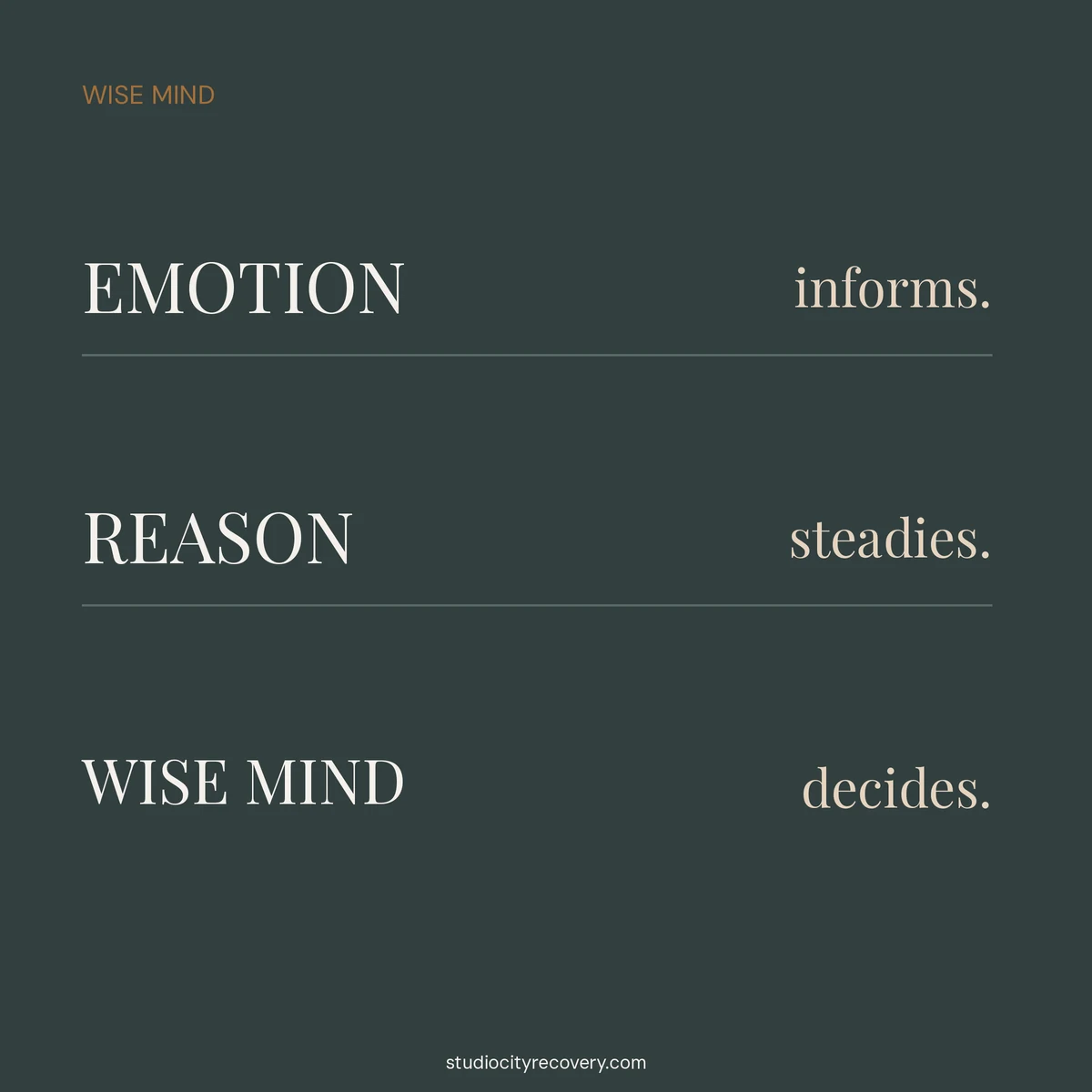
Wise mind is the dialectical behavior therapy skill that describes the state where emotion and reason integrate rather than compete. It is one of the core mindfulness skills in DBT. In recovery, it is the state a person needs to reach before making any decision that a craving is pushing them toward.
What Are the 3 States of Mind?
DBT describes 3 states, and identifying which one you are in is the first step.
- Emotion mind: decisions driven by feeling, with facts filtered to fit the mood.
- Reasonable mind: decisions driven by logic, with emotion excluded entirely.
- Wise mind: the integration of both, where feeling informs a decision without controlling it.
Neither emotion mind nor reasonable mind is wrong on its own. Problems arise when one operates without the other.
How Do You Recognize Which State You Are In?
Each state has recognizable markers.
Emotion Mind Markers
Urgency, absolute language, and physical activation. Thoughts sound like right now, always, never, and everyone. The decision feels obvious and cannot wait.
Reasonable Mind Markers
Detachment, list making, and dismissal of how something feels. The decision looks correct on paper and ignores what the person actually needs.
Wise Mind Markers
Calm certainty without urgency. The decision feels settled rather than compelling, and it holds up an hour later.
How Do You Access Wise Mind?
Four practices build access to the state.
- Stone flake on the lake, visualizing yourself settling slowly toward stillness.
- Breathing in wise, out mind, pairing the words to the breath.
- Asking the question and waiting, posing a decision and listening rather than answering.
- Attending to the breath’s natural pause between inhale and exhale.
None of these work well the first time under high distress. The skill is built during calm periods so it is available during difficult ones.
Why Does Wise Mind Matter in Recovery?
Cravings operate almost entirely in emotion mind. They present as urgent, absolute, and unarguable, and they demand a decision immediately.
Wise mind interrupts that by adding time and perspective. Three shifts follow.
- The urge is recognized as a state rather than a fact.
- The decision waits until the state passes.
- Long-term goals stay in view alongside present discomfort.
Related skills for tolerating what cannot be changed appear in what is radical acceptance in DBT.
How Do You Practice It Day to Day?
Building the skill takes short, frequent repetitions rather than long sessions. Four daily practices work well.
- Pause for 3 breaths before answering any question that carries weight.
- Name the current state out loud, using the words emotion mind or reasonable mind.
- Delay any decision that feels urgent by 24 hours when circumstances allow.
- Revisit yesterday’s decisions and note which state produced them.
The fourth practice is the one that builds recognition fastest, since patterns become visible in hindsight before they become visible in the moment.
How Does It Fit With Other DBT Skills?
Wise mind sits underneath the other skill modules rather than beside them. Distress tolerance, emotion regulation, and interpersonal effectiveness all assume the person can locate a balanced state first.
The full skill set is mapped in our DBT skills list, and the program structure is outlined on our dialectical behavior therapy page.
Frequently Asked Questions
How long does it take to develop wise mind?
Most people notice access within 4 to 8 weeks of daily practice. Reaching it reliably under high distress typically takes months, since the skill has to be available when the nervous system is activated.
Is wise mind the same as intuition?
They overlap but are not identical. Intuition can arise from emotion mind alone, while wise mind requires that reason be present too. The test is whether the decision still holds after the feeling subsides.
What if you cannot find wise mind at all?
That is common early on and usually means arousal is too high. Distress tolerance skills come first, and wise mind becomes accessible once the intensity drops.
Can you use wise mind for everyday decisions?
Yes, and practicing on low-stakes decisions is how the skill becomes reliable. Waiting for a crisis to try it for the first time rarely works.