.svg)

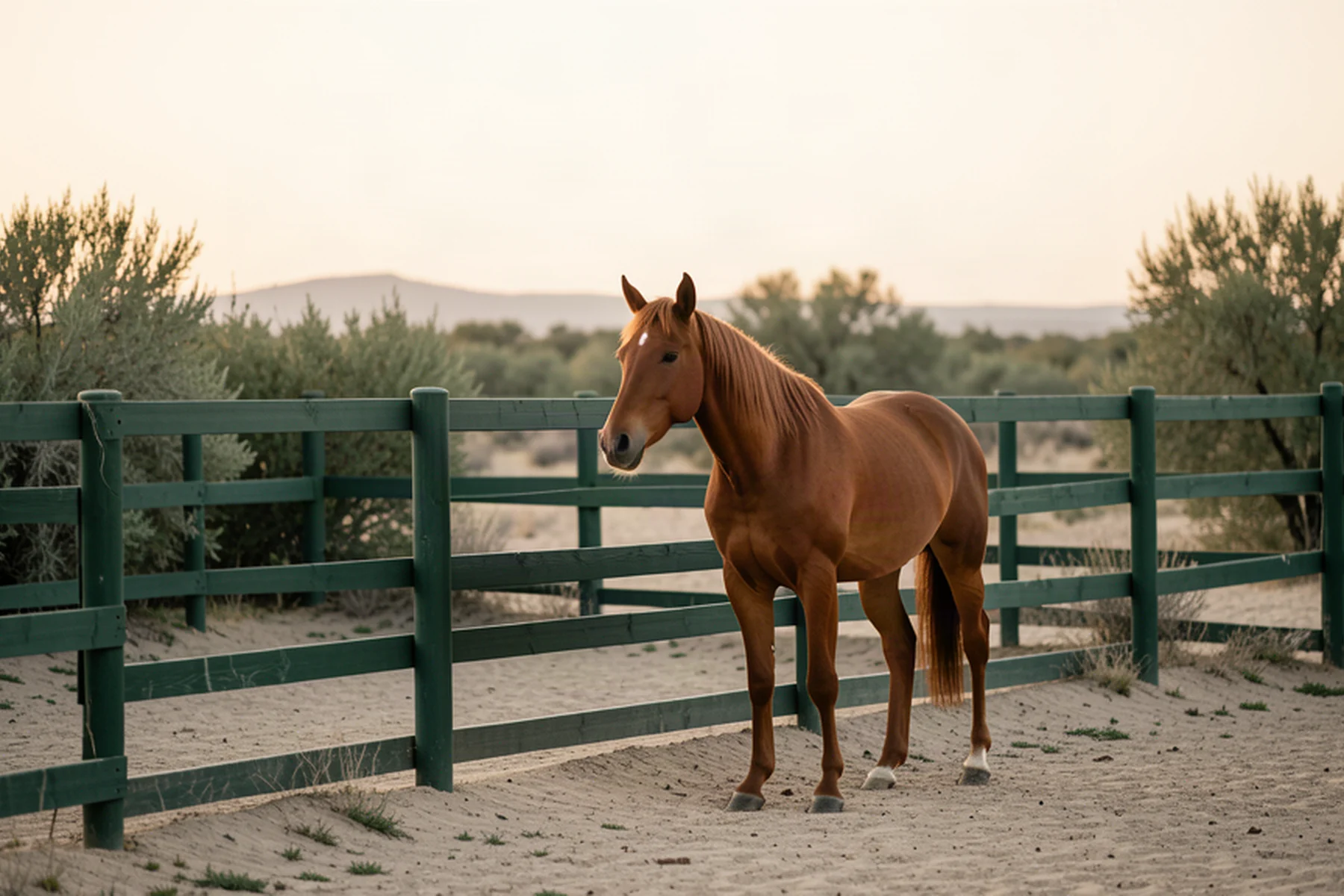
Equine therapy is an experiential treatment where clients work with horses on the ground, guided by a mental health professional and an equine specialist. Most programs involve no riding. The horse functions as immediate feedback on the client’s internal state, which is what makes the work useful.
Why Are Horses Used?
Horses are prey animals with acute sensitivity to body language, breathing, and tension. They respond to what a person is actually feeling rather than what the person is presenting.
That produces 3 clinical advantages.
- Immediate feedback that cannot be argued with or explained away.
- No social judgment, since the horse has no history with the client.
- Nonverbal engagement, useful for clients who intellectualize in talk therapy.
What Happens in a Session?
Sessions are structured around ground-based tasks rather than riding. Five activities are common.
- Observing the herd and noticing what the client notices.
- Approaching and haltering, which surfaces how a person handles uncertainty.
- Leading through a course, requiring clear intention and boundaries.
- Grooming, which involves sustained presence and touch.
- Processing with the clinician about what happened and what it mirrored.
The processing step is where the therapy occurs. The activity generates material, and the conversation makes it usable.
What Does It Target Clinically?
Equine work reaches 4 areas that are difficult to address through discussion alone.
- Emotional awareness, since the horse reacts to states the client has not named.
- Boundaries, because leading a large animal requires clear and consistent signals.
- Frustration tolerance, when a task does not go as planned.
- Trust and attachment, built through repeated nonthreatening contact.
Clients who have learned to suppress or mask emotion find the immediate feedback difficult to bypass, which is precisely the point.
Why Does It Fit Addiction Recovery?
Substance use frequently involves disconnection from internal states. A person who cannot identify what they feel cannot address it, and equine work rebuilds that identification without requiring the client to articulate it first.
Three additional benefits appear consistently: reduced defensiveness compared with office-based sessions, physical activity outdoors, and a task that produces visible competence early in treatment.
What Does the Research Show?
Published research on equine-assisted therapy is growing, with studies reporting improvements in engagement, self-efficacy, and treatment retention. Study sizes remain modest, and methodology varies considerably across programs.
The honest position is that it works well as a component of comprehensive treatment and has not been established as a standalone intervention. It belongs alongside evidence-based therapies rather than in place of them.
How Does It Fit With Other Experiential Approaches?
Equine therapy sits within a broader experiential category that includes outdoor, creative, and movement-based work. Each reaches material that verbal therapy approaches slowly.
Related approaches are covered in how outdoor activities and nature help in addiction recovery and art therapy in addiction recovery. The full modality list appears on our therapies page.
Frequently Asked Questions
Who leads an equine therapy session?
Sessions are co-led by a licensed mental health professional and a qualified equine specialist. The clinician handles the therapeutic process while the specialist manages the horses and safety, and both are present throughout.
Do you need horse experience for equine therapy?
No. Programs are designed for people with no prior exposure, and inexperience is often clinically useful since it surfaces how a person handles unfamiliar situations.
Is equine therapy safe?
Sessions are supervised by an equine specialist alongside the clinician, horses are selected and trained for this work, and safety instruction precedes any contact. Clients with severe allergies or certain physical limitations are screened beforehand.
Is equine therapy covered by insurance?
Equine work is generally delivered as a component of a covered treatment program rather than billed as a separate service. Coverage questions are best directed at the program’s admissions team during benefits verification.
How many sessions does it take?
Programs typically include equine work weekly across a treatment episode. Many clients report a meaningful moment within the first 2 sessions, though the benefit accumulates through repeated processing.