.svg)


Interpersonal effectiveness is the dialectical behavior therapy module that teaches people how to ask for what they need, refuse what they do not want, and keep relationships and self-respect intact while doing it. It is one of 4 DBT skill modules. In recovery, it addresses the situations where most relapses actually begin.
What Are the 3 Priorities in Any Interaction?
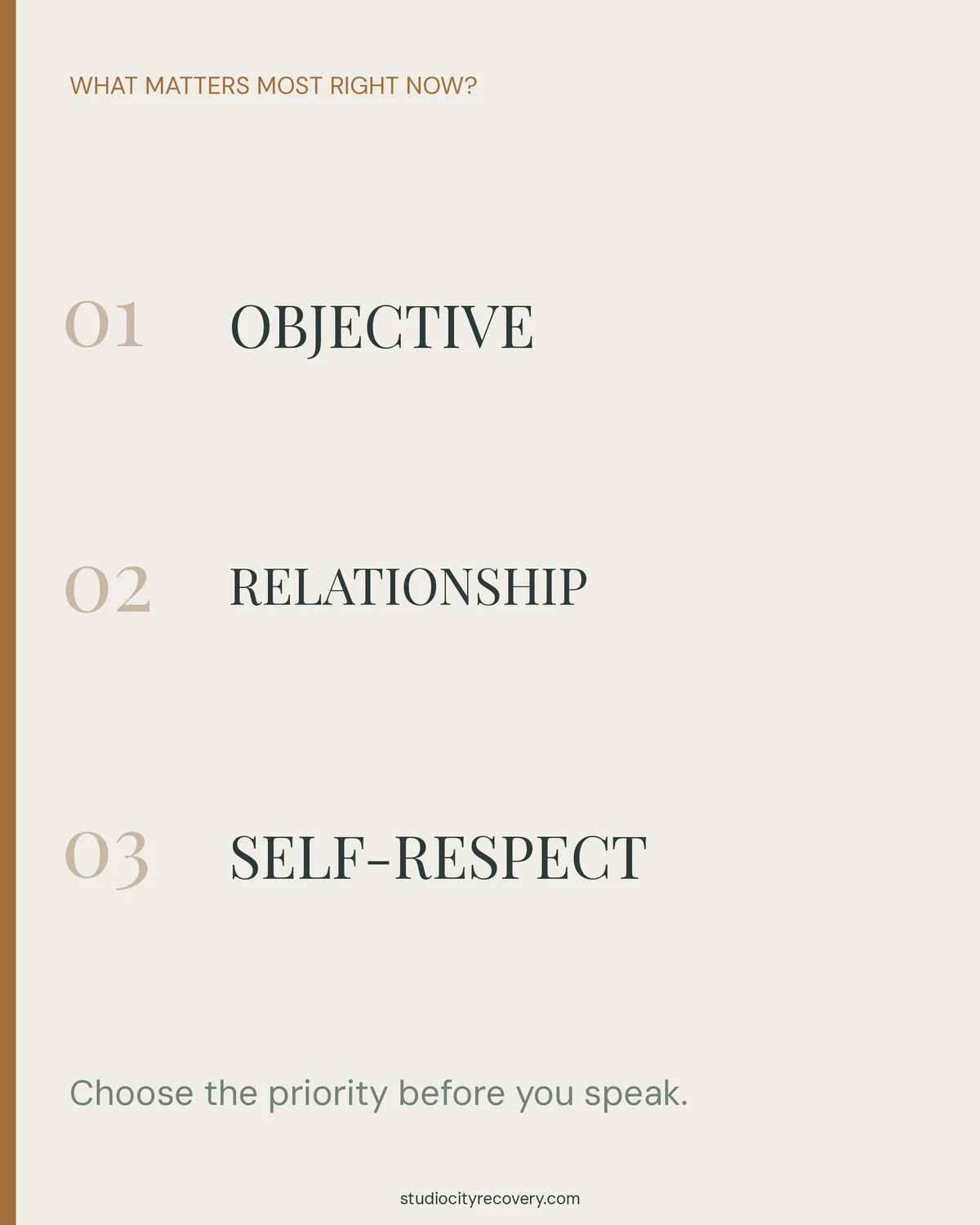
Every interaction involves 3 competing priorities, and DBT teaches people to identify which one matters most before speaking.
- Objective effectiveness: getting the specific outcome you want.
- Relationship effectiveness: keeping the relationship intact.
- Self-respect effectiveness: acting in line with your own values.
All 3 rarely maximize at once. Deciding the priority in advance prevents the common pattern of chasing the outcome and damaging the relationship, or protecting the relationship and abandoning the need.
What Skill Sets Does the Module Contain?
Three named skill sets map to the 3 priorities.
- DEAR MAN for asking or refusing, focused on the objective.
- GIVE for maintaining the relationship during the request.
- FAST for maintaining self-respect throughout.
Skills are combined rather than used in isolation. A difficult conversation with a family member usually needs all 3 at once, weighted toward whichever priority was identified first.
The request-focused skill is broken down in what is the DEAR MAN skill in DBT.
What Does GIVE Cover?
GIVE protects the relationship during a difficult conversation through 4 behaviors.
- Gentle: no attacks, threats, or judgment.
- Interested: listening without interrupting.
- Validate: acknowledging the other person’s position as understandable.
- Easy manner: using humor and warmth where appropriate.
Validation is the component people skip most often, and it is the one that keeps a conversation from escalating.
What Does FAST Cover?
FAST protects self-respect through 4 commitments: being fair to yourself and the other person, offering no unnecessary apologies, sticking to your values, and being truthful.
Excessive apologizing is the most common failure here. Apologizing for having a need undermines the request before it is made.
Why Does This Matter in Addiction Recovery?
Relapse frequently follows an interpersonal event rather than a craving that appeared on its own. Four situations recur.
- Being unable to refuse an invitation involving substances.
- Suppressing a need until resentment builds.
- Avoiding a necessary conversation with family or an employer.
- Losing self-respect in an interaction and reaching for relief afterward.
Each of these is a skill problem with a specific remedy, which is why the module is taught early in treatment.
How Do You Prepare for a Difficult Conversation?
Preparation is part of the skill rather than a substitute for it. Five steps improve the odds before the conversation starts.
- Name the objective in one specific sentence.
- Rank the 3 priorities for this particular conversation.
- Write the DEAR MAN script and read it aloud once.
- Decide in advance what a workable compromise looks like.
- Choose a time when neither person is exhausted or activated.
Conversations attempted without step 4 tend to end in either full capitulation or a standoff, since no middle position was ever defined.
How Is It Taught in Treatment?
Skills are taught in group format with practice, then applied to real situations in individual sessions. Rehearsing a specific upcoming conversation is standard, since the skills degrade quickly under pressure without practice.
The broader skill set appears in our DBT skills list, and program structure is outlined on our dialectical behavior therapy page.
Frequently Asked Questions
How long does it take to learn interpersonal effectiveness skills?
The module is typically taught over 6 to 8 weeks in a standard DBT sequence. Applying the skills reliably in high-stakes conversations takes months of practice.
Do these skills work if the other person is difficult?
Yes, with a realistic goal. The skills improve how you show up and increase the odds of a workable outcome. They do not control the other person’s behavior, and part of the module is deciding when to disengage.
Are these skills only for family relationships?
No. They apply to employers, treatment staff, medical providers, and any interaction requiring a request or a refusal. Workplace conversations are a frequent practice target in early recovery.
What if saying no damages a relationship?
Some relationships depend on the person never refusing anything. Identifying those honestly is part of the work, and the module includes deciding which relationships support recovery and which do not.